Recommended Text-to-Speech Software Summary: 7 Selections for Commercial Use [Free and Paid]
[2025 Edition] Chinese Reading Aloud Study Methods! Recommended Sites, Apps, Sample Sentence Texts and a Thorough Explanation of How to Use Them
Feb. 24, 2026
![[2025 Edition] Chinese Reading Aloud Study Methods! Recommended Sites, Apps, Sample Sentence Texts and a Thorough Explanation of How to Use Them](https://storage.googleapis.com/ondoku3/image/20250129_chinese_ondoku_tmb_930.webp)
I can read Chinese, but I can't speak it~. I want to know how to study by reading aloud!

If you are going to study Chinese, which has particularly difficult pronunciation among foreign languages, I definitely recommend reading aloud!
Because Chinese has four tones and pronunciations not found in other languages, studying conversation and speaking is challenging.
Especially for Japanese people who can read kanji, they often end up "understanding the meaning of the Chinese but unable to read the sentences out loud."
That's why I recommend reading Chinese aloud using an AI text-to-speech site!
By creating Chinese reading aloud materials with the free sites and apps introduced in this article, anyone can effectively study Chinese conversation and speaking.
I will also introduce recommended Chinese reading aloud example texts, so why not use this article as a guide to study Chinese by reading aloud?
[Free] Ondoku: A Recommended Site (Web App) for Reading Chinese Aloud

If you want to study Chinese by reading aloud, the free-to-use text-to-speech site Ondoku is recommended!
Ondoku is a web app that can read out entered Chinese in easy-to-understand, realistic native-pronunciation Chinese.
Since it can be used from a website, it is available on PCs, smartphones, and tablets.
You can also change the speed of the reading to match your Chinese learning level.
What's more, Ondoku is free!
Since you can read up to 5,000 characters for free, you can create over 100 types of Chinese example texts for free at once.
If you are studying Chinese by reading aloud, why not try using the text-to-speech site Ondoku?
How to read Chinese aloud? Free study methods using sites and apps

Among those who have studied Chinese, there are likely many who feel that:
- I can more or less understand the meaning of sentences
- I don't understand the pronunciation at all
Especially for Japanese people who understand kanji, it's very common to "understand the meaning of the characters but not the pronunciation."
That's why I recommend memorizing Chinese by reading aloud!
I will explain the tips for reading Chinese aloud and the tips for studying Chinese for free using text-to-speech sites and apps.
Reasons why Chinese pronunciation and conversation are difficult
There are three reasons why Chinese pronunciation, conversation, speaking, and listening are difficult.
1. It is difficult to memorize Chinese tones
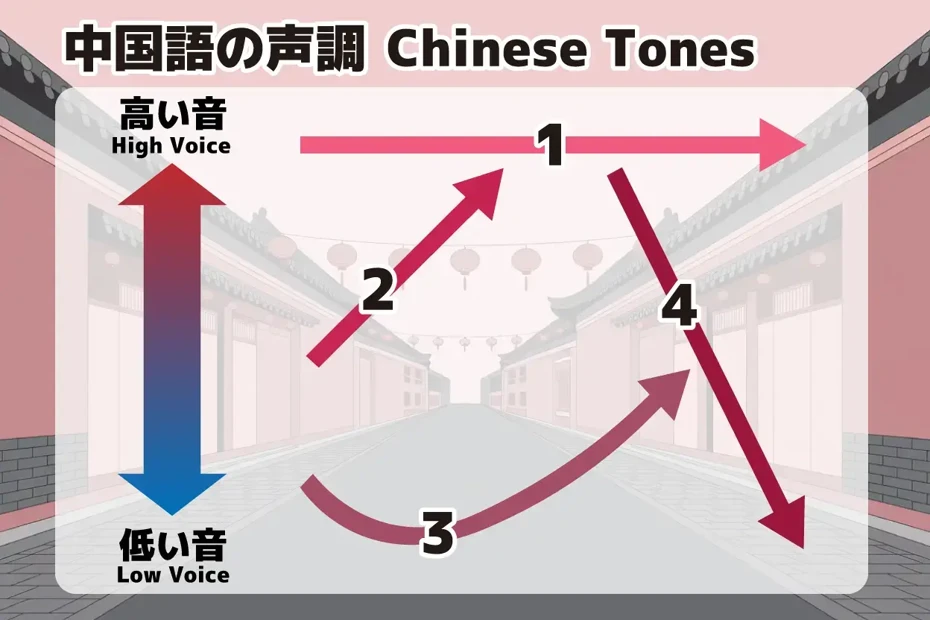
First, tones and pronunciation are difficult.
When you start studying Chinese, the very first thing you are taught is the four tones.
Since this is a concept that does not exist in Japanese or English, it's confusing when you first start studying, isn't it?
Also, it is tedious to memorize the tone for every single word.
Even if you remember the sound of a word, you may often find that you haven't remembered the tone.
2. It is difficult to pronounce tones in succession

However, there is a point that is even more difficult than individual tones.
That is reading words continuously as a sentence.
It is common to be able to pronounce single words well, but then become unable to pronounce them correctly when trying to connect the tones of multiple words.
To become able to connect words and pronounce them as a sentence, the best way is to memorize by reading text aloud!
I recommend reading Chinese aloud using the free sites and apps introduced in this article.
3. Pronunciations unique to Chinese are difficult

Furthermore, pronunciations unique to Chinese are also a difficult point.
For example, the "retroflex sounds" of zhi, shi, chi, and ri are points that tend to become sloppy.
It is common to think you are pronouncing "ri" but it sounds like "li."
When native Chinese speakers talk to foreigners, they often understand these as common mistakes, but you want to learn the correct pronunciation rather than relying on their kindness.
This is another point where you want to learn the correct pronunciation by reading aloud native-pronunciation texts created with AI text-to-speech sites.
3 Benefits of studying Chinese by reading aloud
There are many benefits to studying Chinese pronunciation and speaking by reading aloud.
Beyond simply memorizing pronunciation, you can learn natural Chinese with your body.
1. You can learn Chinese as a flow

When you speak your own native language, you aren't conscious of every single word.
It's the same when a native Chinese person speaks Chinese.
Yes, the key to acquiring a language is to become able to read sentences aloud as a single flow.
Actually, even beginners in Chinese should have memorized the first sentences they learned, like "I am Japanese," as a single block of flow.
Reading Chinese aloud is the process of increasing the number of sentences you have memorized as blocks in the same way.
By repeatedly reading Chinese aloud with the same pronunciation and rhythm as native-pronunciation Chinese audio, you can memorize sentences as a flow.
The more your repertoire of sentences memorized as a flow increases, the more your Chinese resources grow, and the more fluently you will be able to speak Chinese.
2. You can understand where to pause and where to emphasize

Another benefit of reading Chinese example texts aloud is understanding where native speakers pause and where they emphasize.
By imitating native-pronunciation Chinese audio, you will be able to master where to pause and take a breath, and which points to emphasize when speaking Chinese.
With the latest AI text-to-speech sites (apps), even the points of pausing and emphasis in Chinese can be read aloud realistically.
When foreigners speak Chinese, it inevitably tends to become a flat expression without modulation.
By repeatedly reading Chinese example texts aloud, it is possible to acquire Chinese that is not a monotone reading.
3. You can also train your listening skills

Reading aloud is also recommended when you want to improve your Chinese listening skills.
A rule that applies to all languages is that "what you can speak, you can hear."
By repeating the reading aloud of Chinese example texts and increasing your repertoire, the Chinese you can understand by listening will also increase steadily.
When studying Chinese, it is recommended to actually read aloud rather than just listening.
Through reading Chinese aloud, why not practice pronunciation, speaking, and listening at the same time?
Recommended AI Text-to-Speech Site (Web App) for Reading Chinese Aloud
If you want to study Chinese pronunciation and speaking by reading aloud, Ondoku is recommended!
Ondoku is a text-to-speech site that can generate easy-to-understand and realistic Chinese audio using the latest AI.
Since it is a web app used from a browser, it can be used from any environment, including PCs, smartphones, and tablets!
You can also generate audio that reads aloud slowly to match your Chinese learning level, making it possible to memorize example sentences smoothly.
Not only can you read aloud Mandarin (Standard Chinese) with a variety of male, female, and child voices, but it also supports:
- Sichuan dialect
- Henan dialect
- Shandong dialect
- Liaoning dialect
- Shaanxi dialect
- Taiwanese Mandarin
- Cantonese
So it is also recommended for those who want to further level up their Chinese speaking and listening, or those who want to learn Hong Kong Cantonese.
What's more, Ondoku can be used for free!
The number of characters you can read aloud for free is 5,000.
Since the number of characters per sentence in Chinese is small, you can create many materials for reading aloud for free.
Why don't you also use the AI text-to-speech site Ondoku to study Chinese pronunciation, speaking, and conversation?
[Free] What is the recommended method for reading Chinese aloud? (Site/App)
If you want to learn Chinese pronunciation and speaking, reading example texts aloud is the most suitable study method.
But how should you read aloud to be effective?
Here, I will explain the recommended Chinese reading aloud method using an AI text-to-speech site.
1. Find example sentences in a field you are interested in

What's important in language study is using example sentences from a field you are interested in.
Every person studying Chinese should have a reason why they started studying.
First, let's look for example sentences related to that field.
If travel or work was the trigger, example texts for travel or work are best.
Recently, the number of people studying Chinese because of Chinese games like "Genshin Impact" and "Honkai: Star Rail," or because of Chinese celebrities and singers, has also increased.
In such cases, it is also recommended to look for original Chinese lines from games or example texts for celebrity fan activities.
In the second half of this article, I introduce Chinese example texts for various scenes.
Please make use of them for your Chinese reading aloud practice.
2. Practice the pronunciation of unknown words
Next, research unknown words that appear in the example text.
Once you know the pronunciation of a word, try practicing that word individually.
3. Create text-to-speech sentences with the site or app
Once you have learned the pronunciation of the words, try reading the entire example text aloud.
First, create the materials for reading the example text aloud using an AI text-to-speech site (app).
Since AI text-to-speech sites (apps) allow you to change the reading speed, try making audio starting at a slower speed to match your Chinese level.
For Chinese AI text-to-speech, Ondoku is recommended!
I will briefly explain how to create Chinese text-to-speech audio with Ondoku.
How to read Chinese example texts aloud with the AI text-to-speech site Ondoku
Open the Ondoku page from this link.
Paste the Chinese example text into the text box.

Select Chinese in the language selection box (for Standard Chinese, select "Mandarin (Mainland China)").

Select the type of voice.

You can listen to samples of the voices in this article! Please take a look.

For pronunciation checks and listening in Chinese learning! Audition 41 native speakers: female, male, and girl voices | Text-to-speech software Ondoku
Here, you can listen to (sample) Ondoku's Chinese voices. You can choose Chinese voices from Mandarin (Mainland China), Cantonese (Hong Kong), and Mandarin (Taiwan). Voices include female, male, girl, and boy options.
If you want to read aloud slowly, also select the speed of the reading.

Now the preparation is complete.
Press "Read aloud" to start reading.
The reading process is completed immediately.
The screen will switch and the audio player will be displayed.

Listen with the audio player and if there are no issues, download the file.
If the speed is too fast or too slow, try changing the speed and regenerating (since Chinese has few characters per sentence, you can generate many audios for free).
4. Read aloud along with slow-paced audio

Once you have created the reading audio, actually read aloud along with the audio.
First, practice repeatedly along with the slow audio until you can read it well.
The point is to read aloud at the same speed without falling behind or stuttering.
It's also a tip to practice focusing only on the sound without looking at the Pinyin.
5. Practice along with normal-speed audio

Once you are able to read aloud well with the slow audio, try reading aloud at an increased speed.
Just like when you made the slow audio, read the example text at normal speed on the Ondoku page.
Once the reading file is ready, practice by reading aloud repeatedly just like with the slow audio.
It's okay once you can read aloud smoothly without falling behind or stuttering.
Now your Chinese repertoire has increased by one!
Next, try studying other sentences by reading them aloud in the same way!
As you can see, the Chinese reading aloud study method using Ondoku is very simple.
Why not create audio for studying Chinese with the AI text-to-speech site Ondoku?
Practical Pronunciation Example Texts! Perfect for Conversing with Chinese People
From here, I will introduce practical example texts that can be used to create teaching audio with Ondoku!
I have prepared example sentences that get right to the point for actual communication with Chinese people, so please make use of them.
14 Example Texts for the First Time You Converse with Chinese People in Chinese

First are example sentences that are useful when you are not yet accustomed to conversing in Chinese.
Please tell me how to say this in Chinese.
请告诉我这个用中文怎么说。
Qǐng gàosu wǒ zhège yòng Zhōngwén zěnme shuō.
Please tell me how to read this kanji.
请告诉我这个汉字的读法。
Qǐng gàosu wǒ zhège Hànzì de dúfǎ.
Could you write down the Pinyin?
可以写下拼音吗?
Kěyǐ xiě xià pīnyīn ma?
Please tell me the tone of this word.
请告诉我这个词的声调。
Qǐng gàosu wǒ zhège cí de shēngdiào.
Which tone is this?
这是第几声?
Zhè shì dì jǐ shēng?
Could you say that again a bit slower?
可以再说一遍慢一点吗?
Kěyǐ zài shuō yībiàn màn yīdiǎn ma?
Could you write that again?
可以再写一遍吗?
Kěyǐ zài xiě yībiàn ma?
I don't understand the meaning of this word.
我不明白这个词的意思。
Wǒ bù míngbái zhège cí de yìsi.
Could you explain it in simpler words?
可以用更简单的词解释吗?
Kěyǐ yòng gèng jiǎndān de cí jiěshì ma?
I'm studying Chinese, so please let me know if I make a mistake.
我正在学中文,如果有错请告诉我。
Wǒ zhèngzài xué Zhōngwén, rúguǒ yǒu cuò qǐng gàosu wǒ.
Thank you for teaching me Chinese!
谢谢您教我中文!
Xièxie nín jiāo wǒ Zhōngwén!
Thanks for correcting my pronunciation!
谢谢你纠正我的发音!
Xièxie nǐ jiūzhèng wǒ de fāyīn!
Thank you for teaching me so patiently!
谢谢您耐心地教我!
Xièxie nín nàixīn de jiāo wǒ!
Thank you for answering my Chinese questions!
谢谢你回答我的中文问题!
Xièxie nǐ huídá wǒ de Zhōngwén wèntí!
8 Example Texts Regarding the Reason You Started Studying Chinese

When people studying Chinese speak with native speakers, they are often asked why they started studying the language.
Here are example texts explaining the reasons for starting Chinese study, presented by pattern.
I started studying Chinese because I traveled to China.
我去中国旅行之后,开始学习中文了。
Wǒ qù Zhōngguó lǚxíng zhīhòu, kāishǐ xuéxí Zhōngwén le.
I started studying Chinese because of the book "The Three-Body Problem" by Liu Cixin.
我读了刘慈欣の《三体》这本书之后,开始学习中文了。
Wǒ dúle Liú Cíxīn zuòzhě xiě de 《Sān Tǐ》 zhè běn shū zhīhòu, kāishǐ xuéxí Zhōngwén le.
I started studying Chinese because I'm a fan of a Chinese celebrity named Jackson Wang.
因为我是中国王嘉尔这个艺人の粉丝,所以开始学习中文了。
Yīnwèi wǒ shì Zhōngguó Wáng Jiā'ěr zhège yìrén de fěnsī, suǒyǐ kāishǐ xuéxí Zhōngwén le.
I started studying Chinese because I played the Chinese game Genshin Impact.
我玩了中国の原神这个游戏后,开始学习中文了。
Wǒ wánle Zhōngguó de Yuán Shén zhège yóuxì hòu, kāishǐ xuéxí Zhōngwén le.
I started studying Chinese because I watched the Chinese movie "If You Are the One."
我看了中国の《非诚勿扰》这部电影后,开始学习中文了。
Wǒ kànle Zhōngguó de 《Fēichéngwùrǎo》 zhè bù diànyǐng hòu, kāishǐ xuéxí Zhōngwén le.
I started studying Chinese because I began shopping from China on Taobao.
我因为开始在淘宝上从中国买东西,所以开始学习中文了。
Wǒ yīnwèi kāishǐ zài Táobǎo shàng cóng Zhōngguó mǎi dōngxi, suǒyǐ kāishǐ xuéxí Zhōngwén le.
I started studying Chinese to get university credits. But now I'm hooked on studying it.
我为了拿到大学学分开始学习中文,但现在我已经完全沉迷于学习了。
Wǒ wèile ná dào dàxué xuéfēn kāishǐ xuéxí Zhōngwén, dàn xiànzài wǒ yǐjīng wánquán chénmí yú xuéxí le.
I studied a little Chinese at university but forgot it. I'm starting to study again now.
我在大学时学过一点中文,但是都忘了,现在又重新开始学习了。
Wǒ zài dàxué shí xuéguo yīdiǎn Zhōngwén, dànshì dōu wàng le, xiànzài yòu chóngxīn kāishǐ xuéxí le.
7 Example Texts Related to Exchanging Contact Info and SNS

When you become friends with Chinese people, you might exchange contact information for Chinese chat apps like WeChat or QQ.
Also, with Chinese people living in Japan, you might exchange LINE contact information or follow each other on Twitter just like with Japanese people.
Here are example texts regarding contact information and SNS accounts.
Shall we exchange WeChat contact info?
要不要交换微信の联系方式?
Yào bú yào jiāohuàn Wēixìn de liánxì fāngshì?
Shall we exchange QQ contact info?
要不要交换QQの联系方式?
Yào bú yào jiāohuàn QQ de liánxì fāngshì?
Would you like to be LINE friends?
要不要加LINE好友?
Yào bú yào jiā LINE hǎoyǒu?
Could you show me the QR code for your contact info?
可以给我看一下你的联系方式の二维码吗?
Kěyǐ gěi wǒ kàn yīxià nǐ de liánxì fāngshì de èr wéi mǎ ma?
This is the QR code for my contact info.
这是我的联系方式の二维码。
Zhè shì wǒ de liánxì fāngshì de èr wéi mǎ.
Could you tell me your Twitter ID?
可以告诉我你的推特账号吗?
Kěyǐ gàosu wǒ nǐ de Tuītè zhànghào ma?
This is my YouTube channel.
这是我的YouTube频道。
Zhè shì wǒ de YouTube píndào.
13 Example Texts to Use in Calls and Voice Chats

When you make Chinese friends online, you might start talking via apps or playing games while using voice chat.
Here are example texts you can use when communicating with Chinese friends online.
Let's talk via voice chat!
我们用语音聊天吧!
Wǒmen yòng yǔyīn liáotiān ba!
What did you do today?
你今天做了什么?
Nǐ jīntiān zuòle shénme?
Is there anything you're into lately?
你最近有什么沉迷的事情吗?
Nǐ zuìjìn yǒu shénme chénmí de shìqing ma?
What are your plans for the weekend?
周末你打算做什么?
Zhōumò nǐ dǎsuàn zuò shénme?
I woke up early today, so my work went smoothly.
今天早起了一会儿,所以工作很顺利。
Jīntiān zǎo qǐle yīhuìr, suǒyǐ gōngzuò hěn shùnlì.
I woke up early today, so my studies went smoothly.
今天早起了一会儿,所以学习很顺利。
Jīntiān zǎo qǐle yīhuìr, suǒyǐ xuéxí hěn shùnlì.
I stayed up late last night, so I'm very sleepy today.
昨天熬夜了,所以今天很困。
Zuótiān áoyè le, suǒyǐ jīntiān hěn kùn.
I have work tomorrow, so I'm going to bed soon.
明天要上班,所以我差不多该睡了。
Míngtiān yào shàngbān, suǒyǐ wǒ chàbuduō gāi shuì le.
I have school tomorrow, so I'm going to bed soon.
明天要上学,所以我差不多该睡了。
Míngtiān yào shàngxué, suǒyǐ wǒ chàbuduō gāi shuì le.
I'm getting sleepy, so I'm going to sign off.
我有点困了,所以我先下了。
Wǒ yǒudiǎn kùn le, suǒyǐ wǒ xiān xià le.
Japan is one hour ahead of China, so I'm going to sleep now.
日本比中国早一个小时,所以我要先睡了。
Rìběn bǐ Zhōngguó zǎo yīgè xiǎoshí, suǒyǐ wǒ yào xiān shuì le.
Let's talk again sometime!
下次再一起聊天吧!
Xià cì zài yīqǐ liáotiān ba!
Let's play games together again sometime!
下次再一起玩游戏吧!
Xià cì zài yīqǐ wán yóuxì ba!
10 Example Texts Related to Apps and the Internet

When you become interested in Chinese culture, using Chinese apps and internet services is recommended.
However, Chinese apps and services can sometimes be difficult for foreigners to use.
Here are example sentences related to apps and internet services.
I don't have a Chinese phone number starting with 86. How can I register for this app?
我没有以86开头的中国手机号,注册这个应用该怎么办?
Wǒ méiyǒu yǐ bā liù kāitóu de Zhōngguó shǒujī hào, zhùcè zhège yìngyòng gāi zěnme bàn?
I'm using WeChat Pay for the first time. Could you tell me how to use it?
我第一次用微信支付,可以教我一下怎么用吗?
Wǒ dì yī cì yòng Wēixìn Zhīfù, kěyǐ jiāo wǒ yīxià zěnme yòng ma?
I'm using Alipay for the first time. Could you tell me how to use it?
我第一次用支付宝,可以教我一下怎么用吗?
Wǒ dì yī cì yòng Zhīfùbǎo, kěyǐ jiāo wǒ yīxià zěnme yòng ma?
I'm a foreigner, so I can't register for WeChat Pay. Can I pay with Alipay?
我是外国人,所以无法注册微信支付。可以用支付宝付款吗?
Wǒ shì wàiguó rén, suǒyǐ wúfǎ zhùcè Wēixìn Zhīfù. Kěyǐ yòng Zhīfùbǎo fùkuǎn ma?
I also saw the Chinese topic you told me about in a Douyin video.
你告诉我的中国话题,我也在抖音上看过相关的视频。
Nǐ gàosu wǒ de Zhōngguó huàtí, wǒ yě zài Dǒuyīn shàng kànguò xiāngguān de shìpín.
Since I became interested in Chinese culture, I installed Xiaohongshu on my smartphone.
我对中国文化感兴趣之后,就在手机上安装了小红书。
Wǒ duì Zhōngguó wénhuà gǎn xìngqù zhīhòu, jiù zài shǒujī shàng ānzhuāngle Xiǎohóngshū.
Since I became interested in Chinese culture, I started watching Bilibili often.
我对中国文化感兴趣之后,就经常看哔哩哔哩了。
Wǒ duì Zhōngguó wénhuà gǎn xìngqù zhīhòu, jiù jīngcháng kàn Bilibili le.
I use Baidu Translate to translate Japanese into Chinese.
我把日语翻译成中文的时候,用的是百度翻译。
Wǒ bǎ Rìyǔ fānyì chéng Zhōngwén de shíhou, yòng de shì Bǎidù Fānyì.
I use AI services developed in China to translate Japanese into Chinese.
我把日语翻译成中文的时候,用的是中国开发的AI服务。
Wǒ bǎ Rìyǔ fānyì chéng Zhōngwén de shíhou, yòng de shì Zhōngguó kāifā de AI fúwù.
What translation app do you use when you don't understand the meaning of Japanese?
你不懂日语的时候,用什么翻译软件?
Nǐ bù dǒng Rìyǔ de shíhou, yòng shénme fānyì ruǎnjiàn?
6 Example Texts Regarding Chinese Culture in Japan

A topic that is great for conversation with Chinese people in Japan is the culture related to China in Japan or the culture of Chinese people living in Japan.
Here are example texts about Chinese culture in Japan.
I went to Yokohama Chinatown the other day and ate boiled dumplings.
我前几天去了横滨中华街,吃了水饺。
Wǒ qián jǐ tiān qùle Héngbīn Zhōnghuá Jiē, chīle shuǐjiǎo.
I've been to Nishikawaguchi and eaten at a cafeteria for Chinese people.
我去过西川口,在中国人开的餐厅吃过饭。
Wǒ qùguo Xīchuānkǒu, zài Zhōngguó rén kāi de cāntīng chīguo fàn.
Could you recommend some shops where I can buy Chinese ingredients in Japan?
请告诉我日本哪里可以买到中国食材の推荐店铺。
Qǐng gàosu wǒ Rìběn nǎlǐ kěyǐ mǎi dào Zhōngguó shícái de tuījiàn diànpù.
What forwarding company do you use when you shop online from China?
你从中国网购的时候,用什么转运公司?
Nǐ cóng Zhōngguó wǎngòu de shíhou, yòng shénme zhuǎnyùn gōngsī?
Since Taobao started offering free shipping to Japan for orders over 199 yuan, I've been shopping from China a lot.
自从淘宝买满199元就免运费寄到日本之后,我就经常从中国买东西了。
Zìcóng Táobǎo mǎi mǎn yī bǎi jiǔ shí jiǔ yuán jiù miǎn yùn fèi jì dào Rìběn zhīhòu, wǒ jiù jīngcháng cóng Zhōngguó mǎi dōngxi le.
It's just after Chinese New Year right now, so Japanese customs is very crowded.
现在因为中国春节刚过,日本海关非常拥挤。
Xiànzài yīnwèi Zhōngguó chūnjié gāng guò, Rìběn hǎiguān fēicháng yōngjǐ.
9 Example Texts Regarding Travel Topics

These are example texts related to traveling in China.
I have been to Beijing before.
我以前去过北京。
Wǒ yǐqián qùguò Běijīng.
I haven't traveled to China yet, so I'd like to go and see it.
我还没去过中国,所以很想去看看。
Wǒ hái méi qùguò Zhōngguó, suǒyǐ hěn xiǎng qù kàn kàn.
What airline do you usually use when you travel back and forth between China and Japan?
你往返中国和日本的时候,通常坐哪家航空公司?
Nǐ wǎngfǎn Zhōngguó hé Rìběn de shíhòu, tōngcháng zuò nǎ jiā hángkōng gōngsī?
When traveling to your hometown, are there any hotels you would recommend for Japanese people?
去你的家乡旅行时,有没有推荐给日本人住的酒店?
Qù nǐ de jiāxiāng lǚxíng shí, yǒu méiyǒu tuījiàn gěi Rìběn rén zhù de jiǔdiàn?
When I traveled to Hong Kong, I also went to Shenzhen by train.
我去香港旅行的时候,也坐地铁去了深圳。
Wǒ qù Xiānggǎng lǚxíng de shíhou, yě zuò dìtiě qùle Shēnzhèn.
I have traveled from Kobe to Shanghai by ship before.
我从神户坐船去上海旅行过。
Wǒ cóng Shénhù zuò chuán qù Shànghǎi lǚxíng guò.
I want to try traveling by night train in China.
我想在中国坐夜车旅行。
Wǒ xiǎng zài Zhōngguó zuò yèchē lǚxíng.
In the future, I want to travel from Kunming to Laos by rail.
我将来想从昆明坐火车去老挝旅行。
Wǒ jiānglái xiǎng cóng Kūnmíng zuò huǒchē qù Lǎowō lǚxíng.
I want to travel to China by taking the ship from South Korea to Yantai in Shandong Province.
我想从韩国坐船去山东省的烟台,到中国旅行。
Wǒ xiǎng cóng Hánguó zuò chuán qù Shāndōng Shěng de Yāntái, dào Zhōngguó lǚxíng.
5 Example Texts Related to Literature

These are example texts about literature and art, from classical to modern.
Japanese people also study the poems of Chinese poets like Du Fu and Li Bai at school.
日本人也会在学校学习中国诗人杜甫和李白的诗。
Rìběn rén yě huì zài xuéxiào xuéxí Zhōngguó shīrén Dù Fǔ hé Lǐ Bái de shī.
In Japan, among classical Chinese literature, "Romance of the Three Kingdoms" is particularly popular. Many manga based on "Romance of the Three Kingdoms" have been drawn in Japan.
在日本,中国古典文学中《三国演义》特别受欢迎。日本还创作了许多基于《三国演义》的漫画。
Zài Rìběn, Zhōngguó gǔdiǎn wénxué zhōng 《Sānguó Yǎnyì》 tèbié shòu huānyíng. Rìběn hái chuàngzuòle xǔduō jīyú 《Sānguó Yǎnyì》 de mànhuà.
Unlike in China, Cao Cao from "Romance of the Three Kingdoms" is popular in Japan.
与中国不同,日本在《三国演义》中曹操很受欢迎。
Yǔ Zhōngguó bùtóng, Rìběn zài 《Sānguó Yǎnyì》 zhōng Cáo Cāo hěn shòu huānyíng.
Tohoku University in Sendai, Japan, is where Lu Xun studied abroad, and there is a statue of him there.
日本仙台的东北大学是鲁迅留学过的大学,那里还有鲁迅的铜像。
Rìběn Xiāntái de Dōngběi Dàxué shì Lǔ Xùn liúxué guò de dàxué, nàli hái yǒu Lǔ Xùn de tóngxiàng.
The translated version of Liu Cixin's sci-fi novel "The Three-Body Problem" began publication in Japan in 2020. I am also a fan.
刘慈欣の科幻小说《三体》在日本从2020年开始出版翻译版,我也是粉丝。
Liú Cíxīn de kēhuàn xiǎoshuō 《Sān Tǐ》 zài Rìběn cóng èr líng èr líng nián kāishǐ chūbǎn fānyì bǎn, wǒ yě shì fěnsī.
10 Example Texts Related to Manga, Anime, and Games

A very common pattern for Chinese people who want to talk to and become friends with Japanese people is that they became interested in Japanese culture through anime, manga, or games.
It's useful to remember sentences about anime, manga, and games when talking with Chinese people.
*Please replace titles as needed.
I like the anime "Neon Genesis Evangelion."
我喜欢《新世纪福音战士》这个动画。
Wǒ xǐhuan 《Xīn Shìjì Fúyīn Zhànshì》 zhège dònghuà.
I like the manga "Attack on Titan."
我喜欢《进击的巨人》这个漫画。
Wǒ xǐhuan 《Jìnjí de Jùrén》 zhège mànhuà.
I like the anime movie "Your Name."
我喜欢《你的名字》这个动画电影。
Wǒ xǐhuan 《Nǐ de Míngzi》 zhège dònghuà diànyǐng.
I used to watch the anime "Doraemon" when I was a child.
我小时候经常看《哆啦A梦》这个动画。
Wǒ xiǎoshíhou jīngcháng kàn 《Duōlā A Mèng》 zhège dònghuà.
I used to read the manga "Dragon Ball" when I was a child.
我小时候读过《龙珠》这个漫画。
Wǒ xiǎoshíhou dúguò 《Lóngzhū》 zhège mànhuà.
I'm playing the game "Minecraft."
我在玩《我的世界》这个游戏。
Wǒ zài wán 《Wǒ de Shìjiè》 zhège yóuxì.
I like the character Satoru Gojo from "Jujutsu Kaisen."
我喜欢《咒术回战》の五条悟这个角色。
Wǒ xǐhuan 《Zhòushù Huízhàn》 de Wǔ Tiáo Wù zhège juésè.
I'm playing the Chinese game "Honkai: Star Rail."
我在玩中国の《崩坏:星穹铁道》游戏。
Wǒ zài wán Zhōngguó de 《Bēng Huài: Xīng Qióng Tiě Dào》 yóuxì.
I have bought "Genshin Impact" merchandise from China on Taobao.
我在淘宝上买过中国来の游戏《原神》の周边。
Wǒ zài Táobǎo shàng mǎiguò Zhōngguó lái de yóuxì 《Yuán Shén》 de zhōubiān.
Apparently, the old Japanese anime "Ikkyu-san" was popular in China long ago.
听说在中国,日本の旧动画《一休さん》以前很受欢迎呢。
Tīng shuō zài Zhōngguó, Rìběn de jiù dònghuà 《Yīxiū Sān》 yǐqián hěn shòu huānyíng ne.
*This reading uses "桑" (sāng), which is a transliteration of the Japanese "san."
Japan has long had many anime featuring Chinese characters, like "Ranma 1/2."
日本一直以来都有很多像《乱马1/2》这样出现中国角色の动画。
Rìběn yīzhí yǐlái dōu yǒu hěnduō xiàng 《Luàn Mǎ èr fēn zhī yī》 zhèyàng chūxiàn Zhōngguó juésè de dònghuà.
Manga and Anime Titles Useful for Conversing with Chinese People
| Japanese Title | Chinese Title | Pinyin |
|---|---|---|
| Doraemon | 哆啦A梦 | Duōlā A Mèng |
| Crayon Shin-chan | 蜡笔小新 | Làbǐ Xiǎoxīn |
| Pokémon | 宝可梦 | Bǎokěmèng |
| Detective Conan | 名侦探柯南 | Míng Zhēntàn Kē Nán |
| Sailor Moon | 美少女战士 | Měishàonǚ Zhànshì |
| Dragon Ball | 龙珠 | Lóngzhū |
| One Piece | 海贼王 | Hǎizéiwáng |
| NARUTO | 火影忍者 | Huǒyǐng Rěnzhě |
| Demon Slayer: Kimetsu no Yaiba | 鬼灭之刃 | Guǐ Miè zhī Rèn |
| Jujutsu Kaisen | 咒术回战 | Zhòushù Huízhàn |
| Chainsaw Man | 链锯人 | Liànjù Rén |
| Mobile Suit Gundam | 机动战士高达 | Jīdòng Zhànshì Gāo Dá |
| Neon Genesis Evangelion | 新世纪福音战士 | Xīn Shìjì Fúyīn Zhànshì |
| Bakemonogatari | 化物语 | Huà Wù Yǔ |
| Puella Magi Madoka Magica | 魔法少女小圆 | Mó Fǎ Shào Nǚ Xiǎo Yuán |
| Your Name. | 你的名字 | Nǐ de Míngzi |
| Attack on Titan | 进击的巨人 | Jìnjí de Jùrén |
| Bocchi the Rock! | 孤独摇滚 | Gūdú Gǔn gǔn |
Game Titles Useful for Conversing with Chinese People
| Japanese Title | Chinese Title | Pinyin |
|---|---|---|
| League of Legends | 英雄联盟 | Yīngxióng Liánméng |
| Minecraft | 我的世界 | Wǒ de Shìjiè |
| Monster Hunter | 怪物猎人 | Guàiwù Lièrén |
| Apex Legends | Apex英雄 | Āpèisī Yīngxióng |
| VALORANT | 无畏契约 | Wúwèi Qìyuē |
| Animal Crossing | 动物森友会 | Dòngwù Sēnyǒu Huì |
Game Titles from China
| Japanese Title | Chinese Title | Pinyin |
|---|---|---|
| Genshin Impact | 原神 | Yuán Shén |
| Honkai: Star Rail | 崩坏:星穹铁道 | Bēng Huài: Xīng Qióng Tiě Dào |
| Knives Out | 荒野行动 | Huāngyě Xíngdòng |
| Arknights | 明日方舟 | Míngrì Fāngzhōu |
| Azur Lane | 碧蓝航线 | Bì Lán Háng Xiàn |
| Girls' Frontline | 少女前线 | Shàonǚ Qiánxiàn |
4 Example Texts Related to Entertainment and YouTubers

Topics related to celebrities and YouTubers are a staple for small talk with Chinese people.
Here are example texts related to entertainment and YouTubers.
I'm a fan of a singer named Ado.
我是Ado这个歌手の粉丝。
Wǒ shì Ado zhège gēshǒu de fěnsī.
I like the song "KICK BACK" by the singer Kenshi Yonezu.
我喜欢米津玄师这个歌手の《KICK BACK》这首歌。
Wǒ xǐhuān Mǐjīn Xuánshī zhège gēshǒu de 《KICK BACK》 zhè shǒu gē.
I'm a fan of a VTuber named Suisei Hoshimachi.
我是星街彗星这个VTuberの粉丝。
Wǒ shì Xīngjiē huìxīng zhège VTuber de fěnsī.
I'm a fan of the Chinese athlete Ma Long.
我是中国运动员马龙の粉丝。
Wǒ shì zhōngguó yùndòngyuán mǎlóng de fěnsī.
4 Example Texts Regarding Chinese Products

Finally, here are example texts related to Chinese products that are also commonly used in Japan.
The one I use is a laptop from Lenovo, a Chinese brand.
我用的是中国联想品牌の笔记本电脑。
Wǒ yòng de shì Zhōngguó Liánxiǎng pǐnpái de bǐjìběn diànnǎo.
Recently, BYD electric buses have started running in Japan too.
最近,日本也开始有比亚迪の电动巴士行驶了。
Zuìjìn, Rìběn yě kāishǐ yǒu Bǐyǎdí de diàndòng bāshì xíngshǐ le.
At our house, we use a washing machine from Haier, a Chinese brand.
我家用的是中国海尔の洗衣机。
Wǒ jiā yòng de shì Zhōngguó Hǎi'ěr de xǐyījī.
Xiaomi products have very good design and quality.
小米の产品设计和质量都非常好。
Xiǎomǐ de chǎnpǐn shèjì hé zhìliàng dōu fēicháng hǎo.
■ AI voice synthesis software "Ondoku"
"Ondoku" is an online text-to-speech tool that can be used with no initial costs.
- Supports approximately 50 languages, including Japanese, English, Chinese, Korean, Spanish, French, and German
- Available from both PC and smartphone
- Suitable for business, education, entertainment, etc.
- No installation required, can be used immediately from your browser
- Supports reading from images
To use it, simply enter text or upload a file on the site. A natural-sounding audio file will be generated within seconds. You can use voice synthesis up to 5,000 characters for free, so please give it a try.

Text-to-speech software "Ondoku" can read out 5000 characters every month with AI voice for free.
You can easily download MP3s and commercial use is also possible.
If you sign up for free, you can convert up to 5,000 characters per month for free from text to speech.
Try Ondoku now.
HP:
ondoku3.com
Email: ondoku3.com@gmail.com
Email: ondoku3.com@gmail.com
Related posts
"Ondoku" is a Text-to-Speech service that anyone can use for free without installation. If you register for free, you can get up to 5000 characters for free each month. Register now for free
- What is Ondoku
- Start text-to-speech conversion
- Free registration
- Pricing
- Posts
- Try other free services
![[2025 Edition] Chinese Reading Aloud Study Methods! Recommended Sites, Apps, Sample Sentence Texts and a Thorough Explanation of How to Use Them](https://storage.googleapis.com/ondoku3/image/recommend-site-for-studying-spanish_tmb_140.webp)
![[2025 Edition] Chinese Reading Aloud Study Methods! Recommended Sites, Apps, Sample Sentence Texts and a Thorough Explanation of How to Use Them](https://storage.googleapis.com/ondoku3/image/recommend-site-for-studying-german_tmb_140.webp)
![[2025 Edition] Chinese Reading Aloud Study Methods! Recommended Sites, Apps, Sample Sentence Texts and a Thorough Explanation of How to Use Them](https://storage.googleapis.com/ondoku3/image/recommend-site-for-studying-french_tmb_140.webp)
![[2025 Edition] Chinese Reading Aloud Study Methods! Recommended Sites, Apps, Sample Sentence Texts and a Thorough Explanation of How to Use Them](https://storage.googleapis.com/ondoku3/image/recommend-site-for-studying-italian_tmb_140.webp)
![[2025 Edition] Chinese Reading Aloud Study Methods! Recommended Sites, Apps, Sample Sentence Texts and a Thorough Explanation of How to Use Them](https://storage.googleapis.com/ondoku3/image/recommend-site-for-studying-korean_tmb_140.webp)