Recommended Text-to-Speech Software Summary: 7 Selections for Commercial Use [Free and Paid]
[2026 Edition] Free Cantonese Text-to-Speech! Efficient Learning Methods for Beginners through Reading Aloud with AI Voices
Jan. 26, 2026
![[2026 Edition] Free Cantonese Text-to-Speech! Efficient Learning Methods for Beginners through Reading Aloud with AI Voices](https://storage.googleapis.com/ondoku3/image/20250119_cantonese_text_to_speech_tmb_930.webp)
I wonder if there is a way to read text aloud to study Cantonese...

Among the languages spoken in the Chinese-speaking world, **Cantonese**, used mainly in Hong Kong and Macau, is **particularly difficult to study.**
In fact, by using the latest AI services, it is possible to **read aloud Cantonese text** realistically with **native-like pronunciation**!
- I like Hong Kong culture and movies and want to study Cantonese
- I want to accommodate inbound tourists from Hong Kong
- I want to create videos for Hong Kong
The ways to use Cantonese audio created with AI text-to-speech services are endless.
Furthermore, Cantonese is used not only in **Hong Kong** and **Macau** but also in **Malaysia** and **Singapore**, so it can be useful in more ways than you might imagine.
Because its pronunciation differs from Standard Chinese, native-sounding audio is very important for Cantonese.
We will introduce in detail how to use and create text-to-speech audio.
Cantonese is No Problem! Recommended AI Text-to-Speech Services for Reading Aloud

If you want to **read Cantonese text aloud and create audio with native pronunciation**, we recommend **Ondoku**!
Ondoku is an AI service that can **read aloud with easy-to-understand and realistic voices** using the latest AI.
**Since it supports Cantonese**, it's perfect for those interested in Hong Kong culture and movies, or those studying the language!
Of course, it also supports Mandarin and Taiwanese Mandarin, so it's also **recommended for those with a broad interest in the Chinese-speaking world beyond just Hong Kong**.
**And Ondoku is free!**
You can **read up to 5,000 characters for free**, allowing you to get a large amount of audio materials for studying Cantonese all at once.
Why not try creating Cantonese text-to-speech audio with **Ondoku**?
[Solved with AI Text-to-Speech] Points for Studying Cantonese Pronunciation and Conversation by Reading Aloud

I want to learn Cantonese, but it's too difficult~
Cantonese is spoken in Hong Kong, Macau, Guangdong Province, and other parts of southern China, as well as Malaysia and Singapore.
Actually, for foreigners, it is a **particularly difficult language to learn in terms of pronunciation and conversation**.
First, we will introduce the characteristics of Cantonese, study points, and how to study pronunciation and conversation easily and efficiently.
What is the Cantonese used in Hong Kong and Macau? A Chinese dialect with difficult pronunciation

**Cantonese (廣東話)** is **one of the dialects of southern China**.
It is used in **Hong Kong**, **Macau**, and southern China, including **Guangdong Province**.
Hong Kong is particularly important.
Because Hong Kong was a British colony until 1997, cultures such as movies and music flourished.
Hong Kong movie stars like Bruce Lee and Jackie Chan are still famous today.
Even after its return to China, Hong Kong has its **own unique culture**, and **unlike mainland China where Standard Chinese (Mandarin) has spread, Cantonese is widely used.**
If you are a fan of celebrities or artists from Hong Kong, we recommend studying Cantonese!
Mainly used as a colloquial language (spoken language)
Cantonese is a **language used primarily in colloquial (spoken) contexts**.
Therefore, studying **pronunciation and conversation is especially important** for Cantonese compared to other languages.
Even in regions where Cantonese is primarily spoken, such as Hong Kong, Standard Chinese is used for written text.
Regions where Cantonese is used
Cantonese is used in more than just Hong Kong, Macau, and Guangdong Province.
In addition, Cantonese is widely used among ethnic Chinese who have emigrated to **Malaysia, Singapore, the United States, and Canada.**
Pronunciation is completely different from Standard Chinese

Although Cantonese is considered one of the Chinese dialects, its **pronunciation is completely different.**
The clearest example is the **reading of "Hong Kong".**
Comparing Cantonese and Standard Chinese:
- Cantonese: Hēunggóng (Hong Kong)
- Standard Chinese: Xiānggǎng (Xianggang)
As you can see, the **pronunciation is completely different.**
While there are many similarities in basic grammar, separate study from Standard Chinese is necessary for speaking and listening.
Studying Cantonese is hard!
For foreigners, Cantonese is an **extremely difficult language to study**.
The biggest reason is that the **pronunciation is very complex.**
In particular, it is famous for having **six different tones**!
Tones are elements where the meaning changes based on the variation in pitch.
When the pitch rises or falls, the meaning changes even with the same pronunciation.
**When studying Cantonese, you need to memorize six types of tones, as shown in this image.**

In addition to these six, there are also **three patterns called "Checked Tones" (入声)**, so **strictly speaking, you need to learn nine types**...
**Since Standard Chinese has only four tones**, this alone shows how difficult it is to study Cantonese.
Reading aloud is recommended for memorizing Cantonese tones
To smoothly memorize Cantonese tones, we recommend the following method:
- Listen to native-pronunciation audio
- Read aloud exactly like the audio
By **repeatedly imitating and reading aloud with native-pronunciation text-to-speech audio**, you can **learn the difficult pronunciation of Cantonese through muscle memory**.
Since words you can pronounce are also words you can hear, a study method using text-to-speech audio is recommended not only for speaking but also for listening.
Shadowing is effective for studying Cantonese by reading aloud
**"Shadowing"** is particularly effective.
Shadowing is a method where you **continue reading aloud at the same speed and pronunciation**, following the content of the audio.
Instead of reading aloud after finishing the audio file, you **read aloud continuously without pause**.
This is a standard method used in studying various languages besides Cantonese, allowing you to effectively acquire the language.
![[Complete Guide] What is the way to do English shadowing? How to create free materials explained! | Text-to-Speech Software Ondoku](https://storage.googleapis.com/ondoku3/image/20250522_shadowing_tmb_02_930.webp)
Study Cantonese for free with AI text-to-speech services!

When studying Cantonese by reading aloud, you should definitely utilize **AI text-to-speech services**.
AI text-to-speech services can read text using the latest AI speech synthesis engines.
Services using the latest AI can read with **native-like, easy-to-understand, and clear Cantonese audio**!
It is far more effective for studying Cantonese than referring to audio from video sites or movie lines.
Since any text can be read freely, you can get Cantonese materials for any example sentences, such as **daily conversation, travel conversation, fan activities (oshikatsu), or inbound business conversation**!
**AI is an essential item for future Cantonese study.**
If you're studying Cantonese, let's start by experiencing the recommended AI text-to-speech service.
Ondoku: The perfect free AI text-to-speech service for studying Cantonese
**Ondoku** is the **ideal AI text-to-speech service for studying Cantonese**!
Unlike Standard Chinese, **AI services that can read aloud in Cantonese are very rare.**
With Ondoku, you can easily read aloud Cantonese audio with Hong Kong native pronunciation right now.
As it is a web service used from a browser, it can be used from any environment—PC, smartphone, or tablet.
Since it is a multilingual text-to-speech service, it can read more than just Cantonese:
- Standard Chinese (Mandarin): Also supports Liaoning, Shandong, Henan, and Sichuan dialects
- Taiwanese Mandarin
It is also recommended for those who like the culture of the Chinese-speaking world in general, not just Hong Kong.
**And Ondoku is free!**
You can **read up to 5,000 characters for free**, allowing you to generate dozens of practical Cantonese example sentences.
If you want to study Cantonese by reading aloud, why not try **Ondoku**?
Cantonese AI text-to-speech audio can also be used for inbound tourism and video production!
Cantonese audio created with AI text-to-speech services can be used for much more than just studying!
Examples of use include...
1. Guiding inbound tourists with Cantonese audio

We recommend creating **Cantonese guidance audio** to provide **detailed hospitality to inbound tourists**.
**There are over 200,000 inbound tourists from Hong Kong to Japan every month.**
Surprisingly, almost as many inbound tourists are visiting Japan as those from Taiwan or South Korea, whose populations are more than double.
While people living in Hong Kong often understand Standard Chinese (Mandarin), they consider Cantonese their native language.
By using an AI text-to-speech service to **create "special" guidance audio for inbound tourists from Hong Kong**, you can significantly boost the favorability of your shop or service.
Of course, you can also appeal to people living in southern China like Guangzhou and Shenzhen, as well as ethnic Chinese in Malaysia and elsewhere who use Cantonese.
![[Tourist Facilities, Shops, Transportation] How to create guidance broadcast audio for inbound tourists! What are effective recommended multilingual guide methods? | Text-to-Speech Software Ondoku](https://storage.googleapis.com/ondoku3/image/20240926_inbound_guide_announcement_010_930.webp)
2. Increase views with videos featuring Cantonese narration audio!

**Adding Cantonese narration to YouTube videos** is another recommended way to use AI text-to-speech services.
Hong Kong has a population of over 7 million.
Since **far more people live there than in many small European countries**, you can aim for an **increase in views**.
Since AI text-to-speech services allow you to easily create Cantonese video audio, you can produce Cantonese videos for Hong Kong without much effort.
Of course, people who speak Cantonese living outside of Hong Kong, such as in Malaysia and Singapore, will also be able to watch!

As you can see, Cantonese AI text-to-speech audio can be used for much more than just studying!
Why not try using the AI text-to-speech service **Ondoku** for inbound tourism or video production?
[Free] How to read aloud Cantonese with the AI text-to-speech service Ondoku
How can I read aloud Cantonese for free?

From here, we will introduce the process of reading aloud Cantonese text for free with the AI text-to-speech service **Ondoku**!
1. Prepare the Cantonese text (Recommended to use generative AI services)

First, **prepare the Cantonese text** to be read aloud with **Ondoku**.
Cantonese is a language primarily used for speaking.
That's why you should definitely prepare **example sentences that can be used in conversation**.
If you are just starting to study Cantonese, we recommend practicing with **Cantonese travel conversation sentences**.
Also, when creating voice guidance for inbound tourists:
- Bus number XX is convenient for access to XX (tourist attraction)
- Check-out time for this hotel is XX:00
Create Japanese sentences like these according to the scene and try **translating them into Cantonese with an AI translation service**.
When producing a video, it is also recommended to translate the video script into Cantonese using an AI translation service.
When you don't have a script, you can easily turn audio into text using an AI transcription service like Mojiokoshi-san.
How to translate text into Cantonese?
Because Cantonese is a Chinese dialect, **some AI translation services may not support it.**
Major services that support it include:
- Google Translate: Select Cantonese
- Baidu Translate: Select "Chinese (Cantonese)" *
* Strictly speaking, "Yue" (粤语) and Cantonese are different, but this will work for translation. Cantonese refers to one of the dialects of "Yue".
Using generative AI services is recommended for Cantonese translation
When translating text into Cantonese, you should definitely utilize generative AI services.
- ChatGPT
- Gemini
- Claude
By giving instructions to these generative AI services such as:
Please translate this text into Cantonese
(Original text here)
you can have the text translated into Cantonese using native expressions.
2. Free text-to-speech with Ondoku
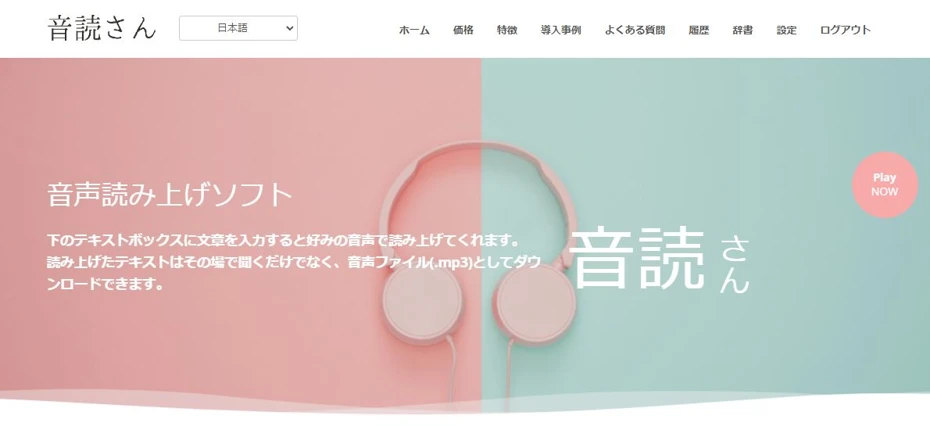
Once the text is ready, open the **Ondoku** page and let's start reading it aloud!
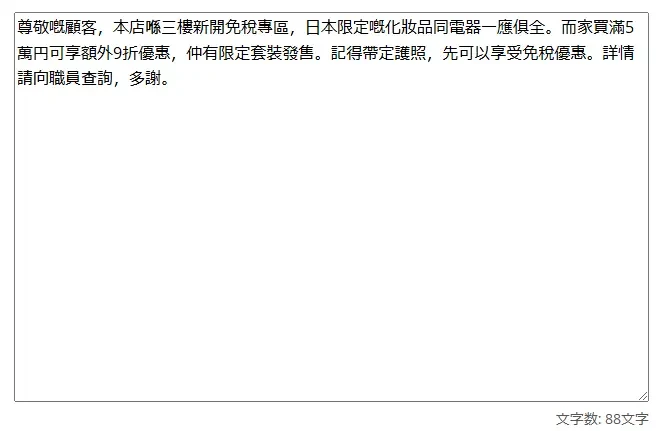
Enter the text in the text box.
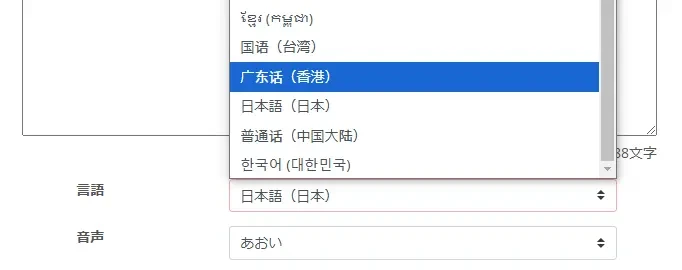
Select **"Cantonese (Hong Kong)"** from the language selection menu.
Select the voice to be used for reading.
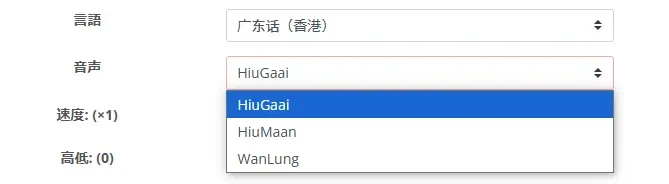
For Cantonese reading in Ondoku, you can choose from three types of voices.
HiuGaai: Female
HiuMaan: Female
WanLung: Male
* The sample text is:
你好,我係Ondoku。我哋一齊開心咁學廣東話啦。
Preparation is now complete.
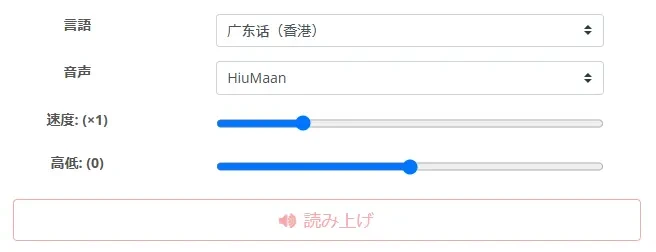
Click "Read" to start reading aloud.
3. Cantonese free text-to-speech completed!
The **reading process will be completed quickly**.
Once the process is finished, the screen will change and an audio player will be displayed.
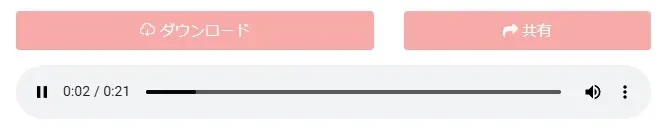
Listen to it on the audio player, and if there are no issues, download it in MP3 format.
This completes the process of using Ondoku to read aloud Cantonese audio!
Why not try reading aloud Cantonese for free with the Cantonese-compatible AI service **Ondoku**?
■ AI voice synthesis software "Ondoku"
"Ondoku" is an online text-to-speech tool that can be used with no initial costs.
- Supports approximately 50 languages, including Japanese, English, Chinese, Korean, Spanish, French, and German
- Available from both PC and smartphone
- Suitable for business, education, entertainment, etc.
- No installation required, can be used immediately from your browser
- Supports reading from images
To use it, simply enter text or upload a file on the site. A natural-sounding audio file will be generated within seconds. You can use voice synthesis up to 5,000 characters for free, so please give it a try.

Text-to-speech software "Ondoku" can read out 5000 characters every month with AI voice for free.
You can easily download MP3s and commercial use is also possible.
If you sign up for free, you can convert up to 5,000 characters per month for free from text to speech.
Try Ondoku now.
HP:
ondoku3.com
Email: ondoku3.com@gmail.com
Email: ondoku3.com@gmail.com
Related posts
"Ondoku" is a Text-to-Speech service that anyone can use for free without installation. If you register for free, you can get up to 5000 characters for free each month. Register now for free
- What is Ondoku
- Start text-to-speech conversion
- Free registration
- Pricing
- Posts
- Try other free services
![[2026 Edition] Free Cantonese Text-to-Speech! Efficient Learning Methods for Beginners through Reading Aloud with AI Voices](https://storage.googleapis.com/ondoku3/image/recommend-site-for-studying-spanish_tmb_140.webp)
![[2026 Edition] Free Cantonese Text-to-Speech! Efficient Learning Methods for Beginners through Reading Aloud with AI Voices](https://storage.googleapis.com/ondoku3/image/recommend-site-for-studying-german_tmb_140.webp)
![[2026 Edition] Free Cantonese Text-to-Speech! Efficient Learning Methods for Beginners through Reading Aloud with AI Voices](https://storage.googleapis.com/ondoku3/image/recommend-site-for-studying-french_tmb_140.webp)
![[2026 Edition] Free Cantonese Text-to-Speech! Efficient Learning Methods for Beginners through Reading Aloud with AI Voices](https://storage.googleapis.com/ondoku3/image/recommend-site-for-studying-italian_tmb_140.webp)
![[2026 Edition] Free Cantonese Text-to-Speech! Efficient Learning Methods for Beginners through Reading Aloud with AI Voices](https://storage.googleapis.com/ondoku3/image/recommend-site-for-studying-korean_tmb_140.webp)