7 Best Text-to-Speech Software for Commercial Use (Free & Paid)
Multilingual AI Voice Preview Page: Tips and Precautions
Aug. 28, 2026
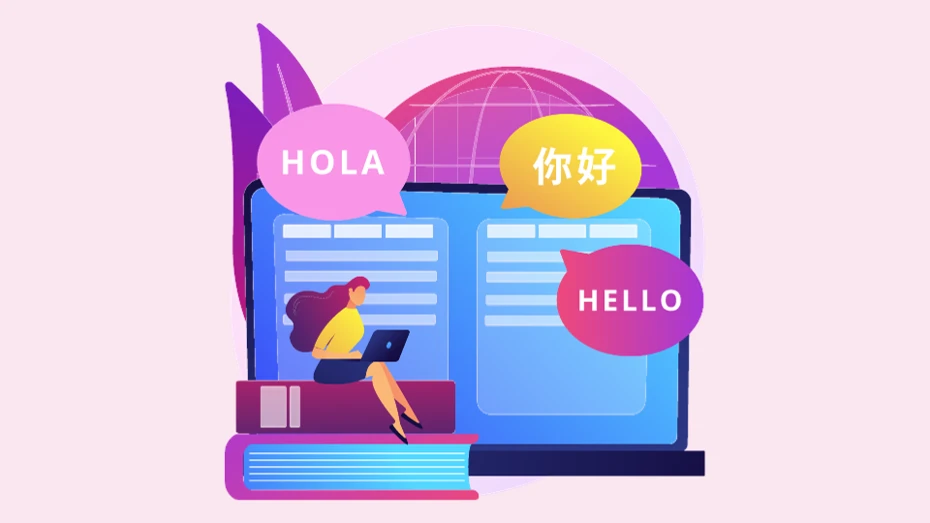
Today, technological evolution is remarkable.
AI voices have also evolved further, and it is now possible for a single speaker to speak various languages.
This time, we will introduce convenient ways to use multilingual AI voices and points to note.

How to use Multilingual voices
Ondoku provides multilingual voices that can speak various languages.
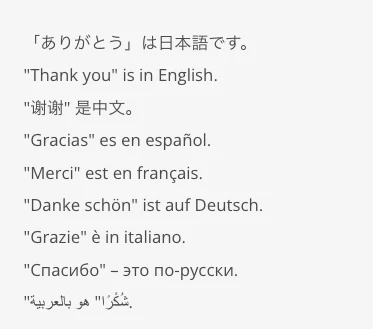
Multilingual voices can speak various languages, including English, Chinese, Spanish, and Arabic.

Multilingual is located at the very top of the language list on Ondoku.
By selecting "Multilingual," more than 40 multilingual voices become available!

The parentheses () following the speaker's name indicate which language is the base language for that speaker.
For example, in the case of "Isabella(it)," it indicates that Italian is the base language.
The contents of the () correspond to language codes.
*The "multilingual" speakers that were previously displayed when selecting individual languages (such as English or Japanese) have now been consolidated here.
Please note that multilingual speakers will no longer be displayed under individual languages.
Audio samples of actual multilingual readings
We will introduce how multilingual voices can actually speak.
The voices include both female and male voices.
- Total: 47 types
Male: 26 types
Female: 21 types
The 47 speakers each have their own unique pronunciation, allowing you to hear audio in various languages with a single voice.
- Speed: A function to make the speaking style fast or slow.
- Pitch: A function to make the voice high or low.
These features are also available. Changing the settings can alter the impression and the ease of listening.
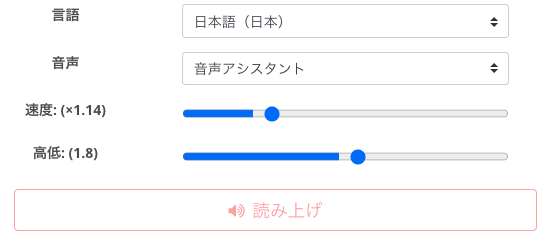
Please try to find the voice and settings that are easiest for you to hear.
With multilingual speakers, even if you enter text in multiple languages, they will read it out with native pronunciation for each language.
Listen to samples (trial listening) of Ondoku's Multilingual voices
Speaker
Audio
Adam(en): Male
Amanda(en): Female
Andrew(en): Male
Ava(en): Female
Brandon(en): Male
Brian(en): Male
Christopher(en): Male
Cora(en): Female
Davis(en): Male
Derek(en): Male
Dustin(en): Male
Emma(en): Female
Evelyn(en): Female
Lewis(en): Male
Lola(en): Female
Nancy(en): Female
Phoebe(en): Female
Samuel(en): Male
Serena(en): Female
Steffan(en): Male
Ada(en): Female
Ollie(en): Male
Florian(de): Male
Arabella(es): Female
Isidora(es): Female
Tristan(es): Male
Ximena(es): Female
Lucien(fr): Male
Vivienne(fr): Female
Remy(fr): Male
Alessio(it): Male
Giuseppe(it): Male
Isabella(it): Female
Marcello(it): Male
Masaru(ja): Male
Hyunsu(ko): Male
Macerio(pt): Male
Thalita(pt): Female
Xiaoxiao(zh): Female
Xiaochen(zh): Female
Xiaoyu(zh): Female
Yunyi(zh): Male
Yunfan(zh): Male
Yunxiao(zh): Male
Jenny(en): Female
Jenny V2(en): Female
Ryan(en): Male
When the spoken language changes, the impression changes completely. Please try comparing them.
Convenient ways to use Multilingual AI voices
Voices that support multiple languages are very active in various scenes.
- Multilingual Guides: Audio guides for tourist spots and museums. You can provide descriptions in multiple languages using the same speaker's voice.
- e-Learning: In online educational content, it becomes possible to provide a single video or audio course in multiple languages.
- Language Learning: Can be used as a resource for learners to compare their native language with the target language.
- Customer Support: Can provide support in the customer's native language through automated responses for phones and chatbots.
- Entertainment: Dubbing for movies, anime, and games can be made available in multiple languages.
- Voice Guidance for Apps and Websites: Can provide multilingual audio guides and help for UIs.
- Audiobooks: Audiobooks in multiple languages can be generated using the same speaker's voice.
Many other uses can be imagined as well.

Use AI voices skillfully and try using them in ways that are convenient for you.
Points to note for Multilingual AI voices
- Accuracy varies depending on the language
- Voices have strengths and weaknesses depending on the language
- Being multilingual does not mean all languages are supported
- Similar languages may be misidentified and pronounced as another language
1. Accuracy varies depending on the language
Multilingual is a voice model that supports multiple languages.
Due to its nature, pronunciation accuracy may vary compared to voice models specialized for a specific language.
For example,
In the case of languages with unique pronunciations like Vietnamese, the voice may be influenced by English pronunciations and read incorrectly.
If accurate pronunciation is required, we recommend using dedicated voice models (e.g., HoaiMy or NamMinh).
In addition, there are some languages that are currently not supported.
2. Voices have strengths and weaknesses depending on the language
Multilingual voices are voice models that are enabled to speak each language based on a source language.
The parentheses () following the speaker's name indicate which language is the base language for that speaker.
For example, in the case of "Isabella(it)," it indicates that Italian is the base language.
The contents of the () correspond to language codes.
The language in the () is the base. Speaking in the base language is what the speaker is best at.
3. Being multilingual does not mean all languages are supported
While Multilingual supports many languages, it does not support every language in the world.
Languages spoken by a small number of people worldwide tend to be unsupported.
Please note that it is not possible to support all languages.

In such cases, please try reading out loud for each individual language!

[Ondoku] Preview voice types and sample audio for supported languages
Here, we introduce Ondoku's supported languages and sample audio.
Expand your world using Multilingual voices
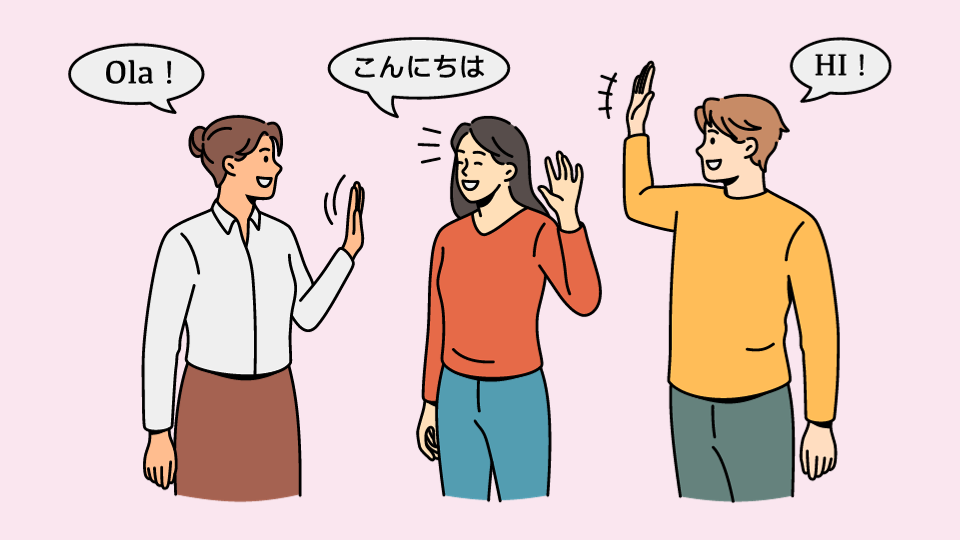
Usually, if you intend to study and master a single language,
Total study time: 1,000 to 3,000 hours
is said to be necessary.
While speaking two languages is hard enough, becoming able to speak three or more languages requires spending an enormous amount of time studying.
Furthermore, attempting to speak and pronounce at a native level requires immense effort.

I can't secure that much study time...
This is where AI voices come into play.
As a partner for your work, as a partner for your studies.

We hope that you will use AI voices to expand your activities and your world.
■ AI voice synthesis software "Ondoku"
"Ondoku" is an online text-to-speech tool that can be used with no initial costs.
- Supports 81 languages and regions, including Japanese, English, Chinese, Korean, Spanish, French, and German
- Available from both PC and smartphone
- Suitable for business, education, entertainment, etc.
- No installation required, can be used immediately from your browser
- Supports reading from images
To use it, simply enter text or upload a file on the site. A natural-sounding audio file will be generated within seconds. You can use voice synthesis up to 5,000 characters for free, so please give it a try.

Text-to-speech software "Ondoku" can read out 5000 characters every month with AI voice for free.
You can easily download MP3s and commercial use is also possible.
If you sign up for free, you can convert up to 5,000 characters per month for free from text to speech.
Try Ondoku now.
HP:
ondoku3.com
Email: ondoku3.com@gmail.com
Email: ondoku3.com@gmail.com
Related posts
"Ondoku" is a Text-to-Speech service that anyone can use for free without installation. If you register for free, you can get up to 5000 characters for free each month. Register now for free
- What is Ondoku
- Start text-to-speech conversion
- Free registration
- Pricing
- Posts
- Try other free services