Best Text-to-Speech Software: 7 Free & Paid Tools for Commercial Use
AI Audio Guides for Museums: Benefits and Implementation Guide
Sept. 8, 2026

I want to introduce audio guides to the art museum!
Audio guides can significantly increase the satisfaction of visitors coming to an art museum.
By introducing audio guides (audio guidance), you can clearly convey the charm of the exhibited works and the highlights of the exhibition, encouraging visitors who are not normally familiar with art to return again and again.
However, have you given up on introducing audio guides because you think it will be expensive?
In fact, with AI-powered text-to-speech services, audio guides for art museums can be introduced easily and at a low cost!
Why not introduce audio guidance and provide service that rivals famous national and prefectural museums at the art museum you manage or work at?
Recommended Text-to-Speech Services for Art Museum Audio Guides
If you want to produce audio for an art museum audio guide, Ondoku is recommended!
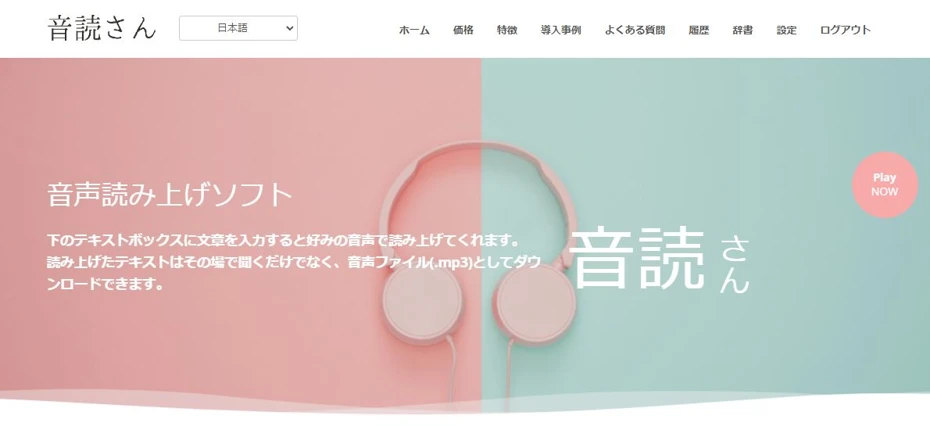
Ondoku is a web service that uses the latest AI to read text in "easy-to-hear audio" and "realistic voices like a real human."
It is easy to use from a web browser—simply enter your text.
Since it supports 81 languages and regions, you can prepare audio guides in foreign languages such as English, Chinese, and Korean to improve service for inbound tourists.
Furthermore, Ondoku can be used for free!
- Without registration: 1,000 characters/month
- With registration: 5,000 characters/month
Since you can read these amounts, it is entirely possible to create an audio guide for one special exhibition for free!
When creating an art museum audio guide, why not try using Ondoku?
What are the benefits of introducing audio guides to art museums?
Audio guides (audio guidance) have become standard at large-scale art museums and special exhibitions.
However, small-scale or private art museums may often be hesitant about introducing them.
In fact, audio guides can be introduced easily and at a low cost!
Moreover, there are many benefits to introducing them.
Benefit 1. Improving Visitor Satisfaction

The biggest benefit of an art museum audio guide is improving visitor satisfaction.
The purposes and knowledge levels of visitors coming to an art museum vary.

If I write captions and explanations for visitors who are knowledgeable about art, they become too difficult, but if I make the content easy, art fans won't be satisfied...
Have you ever had such a worry?
By introducing an audio guide, you can solve that problem!
By using an audio guide to explain the key points of the works in an easy-to-understand way for visitors who are not normally familiar with art, you can convey the charm of the art and increase the number of repeat visitors.
Benefit 2. Increasing the Museum's Revenue

Of course, audio guides also help increase revenue for the art museum!
The market price for renting an audio guide is around 300 to 500 yen.
For a relatively small museum with about 10,000 visitors per year, if 20% of the visitors rent one, that's an increase in sales of 600,000 to 1,000,000 yen.
This is by no means a small amount of income for the operation of an art museum.
Of course, by promoting catalogs and the museum shop within the audio guide, you can expect further increases in revenue!
Benefit 3. Improving Accessibility

Additionally, introducing audio guides can improve accessibility.
For elderly visitors, who are common on weekdays, reading the small text of captions is very difficult.
On the other hand, if you make the captions too large, the calm atmosphere of the exhibition room will be lost.
By introducing audio guides, it is possible for more visitors to enjoy the exhibition.
You can also prevent troubles where visitors get too close to the works to read captions and risk damaging them.
Introducing audio guides is also recommended for achieving universal design.
Benefit 4. Supporting Inbound Tourists

By introducing audio guides to an art museum, you can also improve service for inbound tourists.
The number of foreign tourists visiting Japan is increasing steadily, but many curators may find it difficult to get around to multilingualizing captions and explanations amidst their busy work.
In such cases, we recommend starting with the introduction of audio guides.
The biggest benefit is being able to support foreign languages without making changes to the exhibition room.
Since there is no need to change the placement of captions and explanations, you can prevent situations like "the permanent exhibition explanations being covered in correction stickers."
If you are going to introduce them, it is recommended to start with English, Chinese, and Korean, as there are many tourists to Japan from these regions.
By writing "Foreign language audio guides are available" in various languages on the official website, you can also increase the number of inbound visitors!

Supporting Inbound Tourists! Explanation of the Latest Methods and Benefits of Creating Multilingual Audio Guides for Free
A must-see for cultural facilities struggling with inbound support! A complete manual for multilingual audio guides made with the latest AI. Thoroughly explains everything from how to support Korean and Chinese for free to tips for preventing trouble.
![[Must-read] Solving Inbound x Overtourism Problems! How to Create Multilingual Guidance with Latest AI Tools](https://storage.googleapis.com/ondoku3/image/20241215_inbound_overtourism_tmb_930.webp)
[Must-read] Solving Inbound x Overtourism Problems! How to Create Multilingual Guidance with Latest AI Tools
Are you troubled by overtourism due to the increase in inbound tourists? This article thoroughly explains how to create free multilingual guidance using AI technology and specific countermeasures at tourist spots. We introduce practical guides you can start using immediately.
How to introduce audio guides to art museums?
If you are introducing audio guides (audio guidance) to an art museum, using an AI text-to-speech service is recommended!
It can be introduced at a much lower cost and in a shorter time than before!
Introducing Audio Guides with AI Text-to-Speech Services

Previously, introducing an audio guide to an art museum required hiring professional narrators or voice actors to record the audio.
Not only were costs high, but a long period of time was required from writing the script to completing the audio, and corrections during the exhibition period were difficult.
That is why we recommend text-to-speech services using the latest AI.
AI text-to-speech services can generate realistic and easy-to-hear audio simply by entering text.
A curator can create the audio alone while staying at the museum, so audio guides can be introduced much more easily than by requesting a narrator or voice actor.
Of course, AI text-to-speech services are low cost.
For example, Ondoku allows you to read up to 5,000 characters per month for free just by registering an account!
If you are introducing audio guides (audio guidance) to an art museum, AI text-to-speech services are recommended!
Detailed Support for Permanent and Small-Scale Special Exhibitions

What museums really want people to see is the permanent exhibition, not just special exhibitions.
However, many curators may be struggling with how to increase the ability of permanent exhibitions to attract customers.
With AI-powered audio guides that can be introduced at a low cost, it is possible to realize service improvements for permanent exhibitions that were previously impossible.
You can also provide detailed support for small-scale special exhibitions that are unique projects and not traveling exhibitions.
Of course, it's also fine for municipal-level art museums with relatively small budgets or small-scale museums such as private art museums.
AI text-to-speech audio guides are ideal for increasing the museum's appeal, improving profitability, and above all, spreading art more widely.
Ondoku: A Recommended AI Text-to-Speech Service for Audio Guides
If you are introducing audio guides (audio guidance) to an art museum, Ondoku is recommended!
Ondoku is an AI text-to-speech service that can generate high-quality, realistic, and easy-to-hear audio with the latest AI.
Because it is a simple operation of just entering text, you can create audio smoothly and without stress during busy curatorial work.
It also supports filling out security sheets, so use in public museums is also okay!
Since it supports foreign languages such as English, Chinese, and Korean, you can also create audio guides for inbound tourists.
Furthermore, Ondoku is free!
By registering an account, you can read up to 5,000 characters per month, so you can create audio for one exhibition for free.
Introduced at the National Museum of Ethnology
Ondoku has also been introduced at the National Museum of Ethnology (Minpaku)!
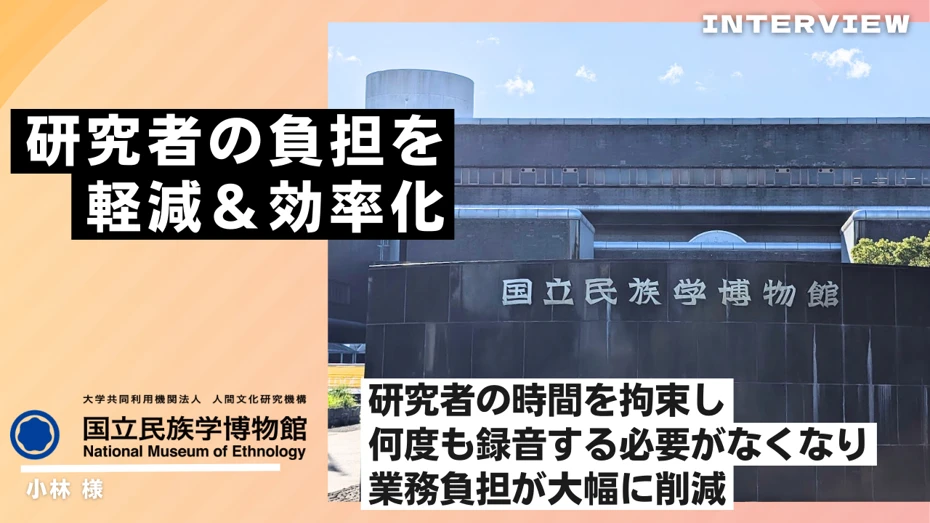
Reducing Researcher Burden and Realizing Efficient Symposiums with Ondoku! Introduction of Case Study at the National Museum of Ethnology
A museum that introduced Ondoku, the National Museum of Ethnology. Ondoku is also active in many art and science museums. Researchers no longer need to be tied up for repeated recordings, significantly reducing the workload. The speed of producing video works has also improved, allowing for tight schedules...
Because art and science museum audio guides contain many technical terms, we recommend using a service with a proven track record.
Why not introduce an audio guide using Ondoku, the AI text-to-speech service perfect for art museums?
How to Make an Art Museum Audio Guide (3 Steps)
How do you make an art museum audio guide?

Finally, we will specifically explain how to make an art museum audio guide using an AI text-to-speech service!
1. Write a Script

First, write a script for the audio guide.
The key is to clearly define the target audience.
Referring to the trends of usual visitors, write the script while being conscious of what kind of customers will listen to the audio guide, such as:
- Those not normally familiar with art
- Knowledgeable art fans
- Children
- Inbound tourists
When in doubt, it's better not to make the content too niche, but rather to target those who don't often come to art museums or light art fans.
Since knowledgeable art fans are likely to buy a catalog, leave the niche content to that and target the script toward a lighter audience to aim for repeat visitors.
Be Conscious of Seasonal Changes in Visitors
During seasons with many children and families, such as summer and spring breaks, we also recommend writing scripts for children.
When writing scripts for inbound tourists, it's also recommended to research changes in tourists by season, such as preparing English scripts for the New Year holidays and Chinese scripts for the Lunar New Year.
Utilize AI Translation Sites for Foreign Language Scripts
When writing scripts in foreign languages, we recommend utilizing AI translation sites.
Specifically, the standard AI translation sites are:
- English: DeepL
- Chinese: Baidu Fanyi (Baidu Translation)
- Korean: Papago
However, be careful of mistranslations.
Particularly for technical terms, artist names, and work titles, we recommend checking the established translations in each language.
2. Create Audio Files with Ondoku
Once the script is ready, create the audio files using Ondoku.
Open the Ondoku top page from here.
Enter the script text into the text box.
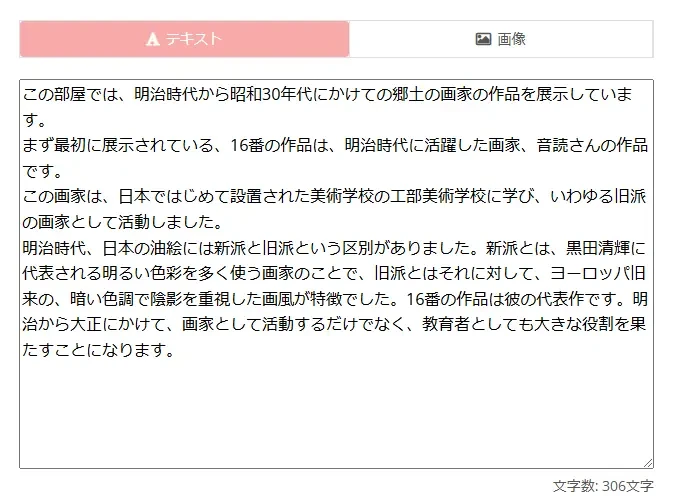
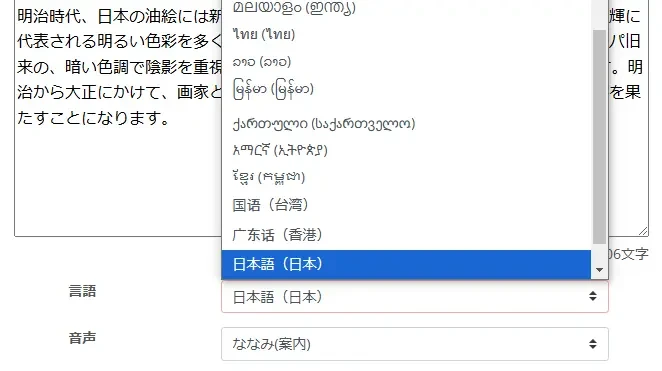
Select the language.
Select the voice.
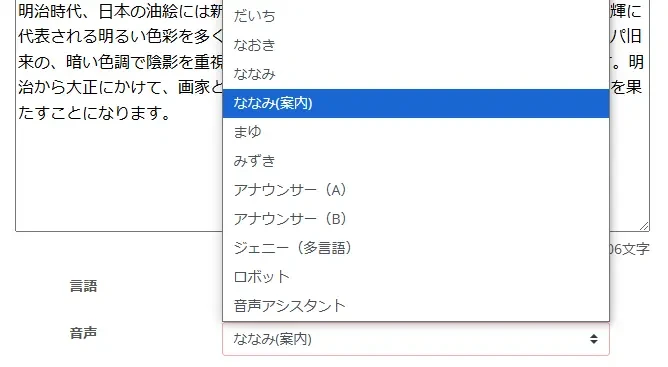
*You can listen to voice samples on these pages.
Press the "Read" button to start generating the audio file.
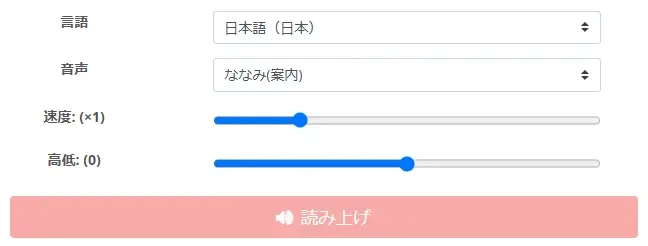
The audio file will be completed in a few seconds.

When the audio file is finished, the display will switch, and you can listen to the generated speech.
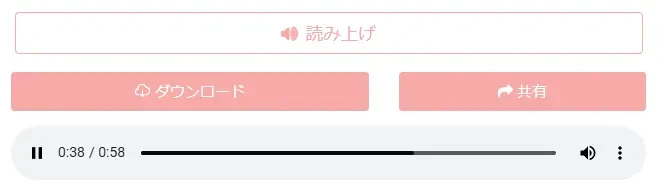
If there are no problems, press "Download" to save the file.
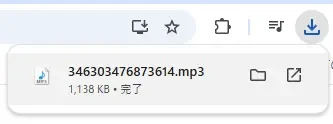
The storage format is MP3.
At this time, it is convenient to save the files with sequential numbers for each chapter of the audio guide so that the audio can be played in order.
Creating audio files for a guide with Ondoku is very easy!
Why not experience Ondoku for yourself starting from here?
3. Provide as an Audio Guide
Once the audio files are complete, provide them to visitors as an audio guide.
There are three main methods for providing audio guides.
1. Dedicated Audio Guide Equipment

Many art museums use playback devices dedicated to audio guides.
In addition to purchasing, they can also be introduced through leasing.
However, the drawback is that since they are dedicated professional equipment, both purchase and lease costs are high.
On the other hand, in the event of trouble, you can have the manufacturer or leasing company handle it.
2. MP3 Player

Simple consumer MP3 players that only have functions for play, stop, rewind, and fast forward are also recommended.
The benefit is that they can be introduced at a very low cost.
The disadvantage is that in the event of problems such as malfunctions, the museum must handle them itself.
This is recommended equipment for small-scale museums that want to keep costs down as much as possible.
Renting Out Neck Speakers Instead of Earphones is Also Recommended
When lending equipment to visitors, it is also recommended to lend neck speakers that hang around the neck instead of earphones.
This method has recently seen increasing adoption for rental equipment in large museums.
Unlike earphones, they do not directly touch the skin, which is an advantage in terms of hygiene.
Also, since ambient sounds can be heard, you can prevent troubles such as visitors bumping into each other.
3. Have Visitors Play on Their Own Smartphones

Another recommended method is to post audio files on the museum's official website and have visitors listen to them.
The benefit is that equipment introduction is unnecessary, and there is no hassle with lending.
The disadvantages are that rental fees are not generated if they are simply posted, and it takes effort to have visitors prepare their own earphones.
This is a recommended method when the goal is not revenue from the audio guide itself, but rather increasing revenue through museum shop sales or repeat visitors.
■ AI voice synthesis software "Ondoku"
"Ondoku" is an online text-to-speech tool that can be used with no initial costs.
- Supports 81 languages and regions, including Japanese, English, Chinese, Korean, Spanish, French, and German
- Available from both PC and smartphone
- Suitable for business, education, entertainment, etc.
- No installation required, can be used immediately from your browser
- Supports reading from images
To use it, simply enter text or upload a file on the site. A natural-sounding audio file will be generated within seconds. You can use voice synthesis up to 5,000 characters for free, so please give it a try.

Text-to-speech software "Ondoku" can read out 5000 characters every month with AI voice for free.
You can easily download MP3s and commercial use is also possible.
If you sign up for free, you can convert up to 5,000 characters per month for free from text to speech.
Try Ondoku now.
HP:
ondoku3.com
Email: ondoku3.com@gmail.com
Email: ondoku3.com@gmail.com
Related posts
"Ondoku" is a Text-to-Speech service that anyone can use for free without installation. If you register for free, you can get up to 5000 characters for free each month. Register now for free
- What is Ondoku
- Start text-to-speech conversion
- Free registration
- Pricing
- Posts
- Try other free services