Best Text-to-Speech Software: 7 Free & Paid Tools for Commercial Use
Daily Chinese Conversation Phrases & How to Create Original Audio Materials [With Audio]
Sept. 9, 2026
![Daily Chinese Conversation Phrases & How to Create Original Audio Materials [With Audio]](https://storage.googleapis.com/ondoku3/image/chinese_930.webp)

I want to try chatting with Chinese friends in Chinese!
I want to memorize phrases and communicate!

For those of you, we will introduce everyday Chinese conversation phrases and example sentences that can be used right now, categorized by specific scenes.
All audio used in this article are Ondoku AI voices. They are pronounced by male and female voices.
If any of the pronunciations are difficult to hear, please try having them pronounced with a different voice type. Having it pronounced in a voice you like makes it even easier to understand.
We will also show you how to create your own original audio teaching materials using the convenient "Ondoku," which allows you to convert Chinese text or images into audio and even download them as MP3s.
Please make use of it!
1. Greetings
Phrases
Audio
Thank you.
Xièxiè
谢谢。
Good morning.
Zǎo shàng hǎo
早上好。
Welcome.
Huānyíng
欢迎。
Good night.
Wǎn'ān
晚安。
Have a nice day.
Zhù nǐ yīgè hǎo de yītiān
祝你一个好的一天。
Nice to meet you.
Hěn gāoxìng jiàn dào nǐ
很高兴见到你。
How are you?
Nǐ hǎo ma?
你好吗?
Nice to meet you (Pleased to meet your acquaintance).
Qǐng duō guānzhào
请多关照。
Goodbye, see you again.
Zàijiàn, huí tóu jiàn
再见,回头见。
Take care.
Bǎozhòng
保重。
2. Buying food at a supermarket

Phrases
Audio
How much is this?
Zhè shì duōshǎo qián?
这是多少钱?
Can you put it in a bag for me?
Kěyǐ bāng wǒ zhuāng dài ma?
可以帮我装袋吗?
Is there a discount?
Yǒu zhékòu ma?
有折扣吗?
Is this product in stock?
Zhè jiàn shāngpǐn yǒu kùcún ma?
这件商品有库存吗?
Where is the shopping cart?
Gòuwù chē zài nǎlǐ?
购物车在哪里?
Can I use a credit card?
Kěyǐ yòng xìnyòngkǎ ma?
可以用信用卡吗?
What kind of ingredient is this?
Zhè shì shénme shí cái?
这是什么食材?
Can I return this product?
Wǒ kěyǐ tuì zhè jiàn shāngpǐn ma?
我可以退这件商品吗?
Can I have a sample/taste?
Kěyǐ shìshí ma?
可以试食吗?
3. Having a meal with friends

Phrases
Audio
Please show me the menu.
Qǐng gěi wǒ càidān
请给我菜单。
I'll order this.
Wǒ yào zhègè
我要这个。
This is delicious.
Hǎochī
好吃。
Would you like something sweet?
Nǐ yào chī tián de ma?
你要吃甜的吗?
Would you like a beer?
Yào píjiǔ ma?
要啤酒吗?
What is the name of this dish?
Zhè dào cài jiào shénme míngzi?
这道菜叫什么名字?
What is recommended at this restaurant?
Zhè jiā diàn de tuījiàn shì shénme?
这家店的推荐是什么?
More water, please.
Qǐng gěi wǒ gèng duō shuǐ
请给我更多水。
The check, please.
Mǎidān
买单。
4. Asking for directions

Phrases
Audio
Where is the station?
Chēzhàn zài nǎlǐ?
车站在哪里?
Please turn right.
Qǐng yòu zhuǎn
请右转。
Could you show me a map?
Kěyǐ gěi wǒ dìtú ma?
可以给我地图吗?
Where is the restroom?
Cèsuǒ zài nǎlǐ?
厕所在哪里?
Is it far from here?
Lí zhèlǐ yuǎn ma?
离这里远吗?
Where is the bus stop?
Gōngjiāo chēzhàn zài nǎlǐ?
公交车站在哪里?
How do I get here?
Wǒ yīnggāi rúhé qù zhèlǐ?
我应该如何去这里?
Do I turn left at the next intersection?
Xià yīgè lùkǒu zuǒ zhuǎn ma?
下一个路口左转吗?
Is this place a tourist attraction?
Zhè ge dìfāng shì guānguāng míngshèng ma?
这个地方是观光名胜吗?
5. Apologizing for a mistake

Phrases
Audio
I am sorry.
Duìbùqǐ
对不起。
It's my mistake.
Zhè shì wǒ de cuò
这是我的错。
Please forgive me.
Qǐng yuánliàng wǒ
请原谅我。
I've caused you trouble because of my mistake.
Wǒ de cuò, gěi nǐ tiān máfan le
我的错,给你添麻烦了。
Please don't worry about it.
Bùyào zàiyì
不要在意。
Are you okay?
Nǐ méishì ba?
你没事吧?
I'll be careful from next time.
Xià cì wǒ huì zhùyì
下次我会注意。
I'm sorry for making you worry.
Ràng nǐ dānxīn le, duìbùqǐ
让你担心了,对不起。
6. Common phrases

Phrases
Audio
I understand.
Wǒ míngbái le
我明白了。
Here you go / After you.
Qǐng
请。
Sorry for the trouble.
Máfan nǐ le
麻烦你了。
Could you say that again?
Qǐng zài shuō yīcì
请再说一次。
Please wait.
Qǐng děng yīxià
请等一下。
Could you tell me the time?
Qǐng wèn jǐ diǎn?
请问几点?
Where were you born?
Nǐ zài nǎlǐ chūshēng de?
你在哪里出生的?
What is your name?
Nǐ jiào shénme míngzi?
你叫什么名字?
7. Conversation between two people

This is a conversation between two people who met by chance in town.
A (Li Lei): 嗨,你好!好久不见了!
Hāi, nǐ hǎo! Hǎojiǔ bújiàn le!
"Hi, hello! Long time no see!"B (Han Meimei): 啊,李雷!是你啊!真没想到在这里碰到你!
A, Lǐ Léi! Shì nǐ a! Zhēn méi xiǎngdào zài zhèlǐ pèngdào nǐ!
"Ah, Li Lei! It's you! I really didn't expect to run into you here!"A (Li Lei): 我也是!你最近怎么样?
Wǒ yěshì! Nǐ zuìjìn zěnme yàng?
"Me too! How have you been lately?"B (Han Meimei): 挺好的,谢谢!你呢?忙吗?
Tǐng hǎo de, xièxiè! Nǐ ne? Máng ma?
"I'm good, thanks! And you? Busy?"A (Li Lei): 有点忙,但是都还好。对了,下个星期六有空吗?我们可以一起吃饭。
Yǒudiǎn máng, dànshì dōu hái hǎo. Duìle, xià gè xīngqīliù yǒu kòng ma? Wǒmen kěyǐ yīqǐ chīfàn.
"A bit busy, but I'm doing okay. Oh, by the way, are you free next Saturday? Let's have a meal together."B (Han Meimei): 好主意!我也想和你见面。下个星期六见!
Hǎo zhǔyì! Wǒ yě xiǎng hé nǐ jiànmiàn. Xià gè xīngqīliù jiàn!
"Good idea! I wanted to see you too. See you next Saturday!"A (Li Lei): 好的,下周六见!保重!
Hǎo de, xià zhōu liù jiàn! Bǎozhòng!
"Alright, see you next Saturday! Take care!"B (Han Meimei): 你也是,再见!
Nǐ yěshì, zàijiàn!
"You too, goodbye!"
Ondoku, a service that allows you to easily read Chinese aloud
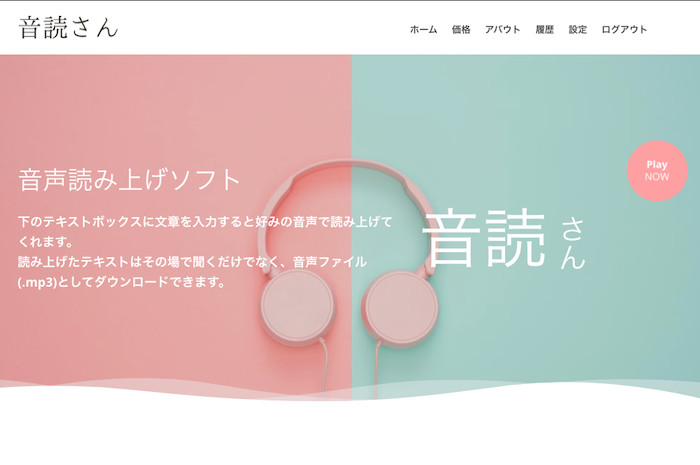
Ondoku is a service that can read aloud text or images by converting them into audio. It is simple and easy to operate.
This service is perfect for checking the pronunciation of people like us who are studying Chinese!
It supports both Simplified and Traditional characters, and there are multiple speakers such as women and men, so you can choose your preferred voice.
Types of Chinese voices in Ondoku
Voices include women, men, girls, and boys.
- Mandarin (Mainland China)
Male: 10 types
Female: 16 types
Boys: 3 types
Girls: 3 types - Cantonese (Hong Kong)
Male: 1 type
Female: 2 types - Mandarin (Taiwan)
Male: 3 types
Female: 3 types
41 speakers each have their own unique pronunciation, allowing you to hear realistic Chinese.
- Functions to make the speaking style faster or slower
- Functions to make the pitch higher or lower
are also provided. Changing the settings can change the impression and ease of listening.
Ondoku >> Chinese Audio Preview Page
When I had a Chinese friend listen to the audio, they said, "Amazing! Native!"
You can preview Chinese audio samples for free in this article, so please check it out!

For pronunciation checks and listening in Chinese language learning! Preview (test listen) 40 native speakers: voices of women, men, and girls
Here you can preview (test listen to) Ondoku's Chinese audio. You can choose Chinese audio from regional languages: Simplified Chinese (Mandarin), Cantonese, and Traditional Chinese (Taiwanese Mandarin). Voices include women, men, girls, and boys.
In addition to this, it supports 81 languages and regions, so you can use it for learning languages other than Chinese.
![[Ondoku] Types of voices for supported languages and sample audio previews](https://storage.googleapis.com/ondoku3/image/%E5%A4%9A%E6%A7%98%E6%80%A7_930.webp)
[Ondoku] Types of voices for supported languages and sample audio previews
Here we will introduce the supported languages and sample audio of Ondoku.
It can basically be used for free, and paid use is required if you want to increase the number of characters read aloud.
However, if you are just checking Chinese pronunciation, it can be used sufficiently within the free range.
How to use Ondoku
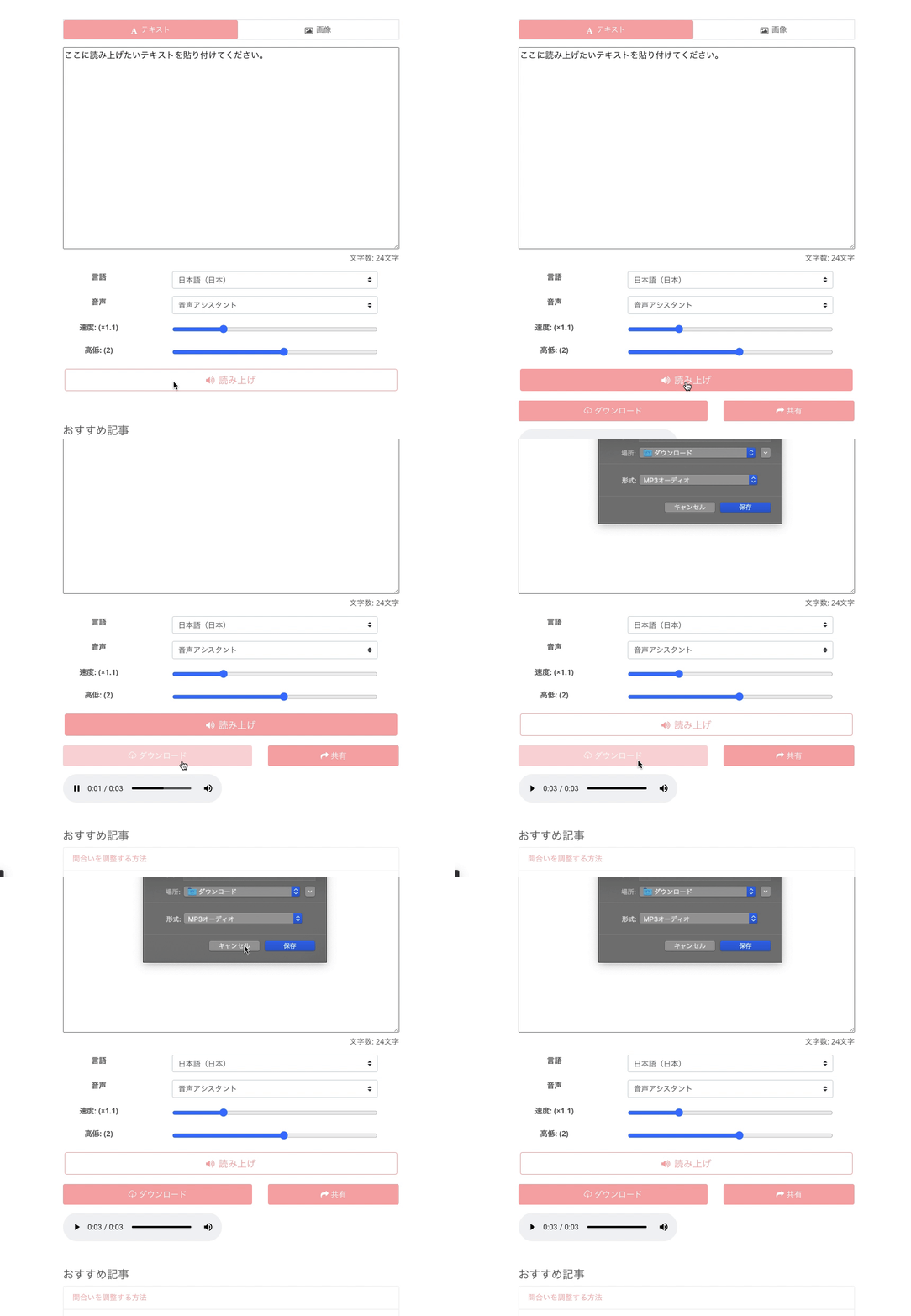
How to use Ondoku for free is very simple.
There is no need to download apps or software. One of the attractions is that everything can be done in a web browser.
Usage:
- Access the Ondoku site
- Enter the characters you want to read aloud in the text box (copy-pasting is also OK)
- Adjust to your preferred settings such as language, voice type, and voice speed
- Click "Read Aloud"
That is all it takes.
Furthermore, audio can also be downloaded in MP3 format.
Textbooks and handouts can also be read aloud
A hidden convenient feature of Ondoku is
the "read text aloud when an image is uploaded" function.
This function allows images taken with a smartphone or similar device to be read aloud as audio.

You can take pictures of picture books, books, textbooks, etc., and have them read aloud with Ondoku.
It's very convenient because there are some Chinese characters that cannot be entered from Japanese smartphones or computers!
This function instantly solves problems like "I don't know how to read this" when teaching Chinese to children at home or reading Chinese textbooks.
Moreover, it is very convenient as there is no hassle because you don't have to enter words one by one yourself.
[How to use the Image -> Text Read Aloud function]
- Access the Ondoku top page
- There are "Text" and "Image" tabs above the text box
- Click the "Image" tab
- Click Image Upload and choose your favorite image
*For smartphones, you can also launch the camera and take a photo directly here.- After selecting the image, adjust the reading speed and pitch.
- Click the read aloud button
Then, the image is analyzed in a few seconds and the audio can be read aloud.
After loading the image, the recognized characters are displayed in the text box.
If there are recognition errors and the reading sounds strange, you can edit it here.
Detailed usage is introduced here.

How to use image reading aloud | Method to turn text in photos into audio using free OCR
Explaining the function of 'Ondoku' which can read text from images and photos (OCR) and read it aloud. It can be used for free. On both PC and smartphone, reading is completed in just a few seconds simply by uploading an image.
Ondoku is perfect for Chinese language learning
Checking Chinese pronunciation and reading Chinese sentences aloud. Furthermore, it can even recognize characters from images and read Chinese aloud...! Ondoku is very convenient.
It's truly a great era where you can use so many functions for free.
Since it's free, you can try it right now!
May the excellent Ondoku, which reads aloud with Chinese pronunciation, help you in your efforts to study Chinese.
Please do give it a try.
Related articles on Chinese reading aloud
For pronunciation checks and listening in Chinese language learning! Preview (test listen) 40 native speakers: voices of women, men, and girls
Here you can preview (test listen to) Ondoku's Chinese audio. You can choose Chinese audio from regional languages: Simplified Chinese (Mandarin), Cantonese, and Traditional Chinese (Taiwanese Mandarin). Voices include women, men, girls, and boys.
![The best site for reading aloud and downloading Pinyin pronunciations [A must-see for Chinese learners]](https://storage.googleapis.com/ondoku3/image/superb-site-for-pinyin-speech_930.webp)
The best site for reading aloud and downloading Pinyin pronunciations [A must-see for Chinese learners]
Ondoku is a site that can read aloud and download sentences in both Chinese characters and Pinyin notation. Using a smartphone, you can also have Chinese pronounced from a photo taken on the spot.
![[2026 Edition] Chinese reading aloud study method! Thorough explanation of recommended sites, apps, example texts, and how to use them](https://storage.googleapis.com/ondoku3/image/20250129_chinese_ondoku_tmb_930.webp)
[2026 Edition] Chinese reading aloud study method! Thorough explanation of recommended sites, apps, example texts, and how to use them
Solving the problem of being able to read kanji but not being able to pronounce it! Introducing carefully selected sites and apps recommended for reading Chinese aloud. Explaining how to use the free 'Ondoku,' tips for acquiring native-level pronunciation, and example texts.
■ AI voice synthesis software "Ondoku"
"Ondoku" is an online text-to-speech tool that can be used with no initial costs.
- Supports 81 languages and regions, including Japanese, English, Chinese, Korean, Spanish, French, and German
- Available from both PC and smartphone
- Suitable for business, education, entertainment, etc.
- No installation required, can be used immediately from your browser
- Supports reading from images
To use it, simply enter text or upload a file on the site. A natural-sounding audio file will be generated within seconds. You can use voice synthesis up to 5,000 characters for free, so please give it a try.

Text-to-speech software "Ondoku" can read out 5000 characters every month with AI voice for free.
You can easily download MP3s and commercial use is also possible.
If you sign up for free, you can convert up to 5,000 characters per month for free from text to speech.
Try Ondoku now.
HP:
ondoku3.com
Email: ondoku3.com@gmail.com
Email: ondoku3.com@gmail.com
Related posts
"Ondoku" is a Text-to-Speech service that anyone can use for free without installation. If you register for free, you can get up to 5000 characters for free each month. Register now for free
- What is Ondoku
- Start text-to-speech conversion
- Free registration
- Pricing
- Posts
- Try other free services
![Daily Chinese Conversation Phrases & How to Create Original Audio Materials [With Audio]](https://storage.googleapis.com/ondoku3/image/irodori-tts_tmb_140.webp)
![Daily Chinese Conversation Phrases & How to Create Original Audio Materials [With Audio]](https://storage.googleapis.com/ondoku3/image/tategaki-image-yomiage_howto_tmb_140.webp)
![Daily Chinese Conversation Phrases & How to Create Original Audio Materials [With Audio]](https://storage.googleapis.com/ondoku3/image/iphone-video-narration_tmb_140.webp)
![Daily Chinese Conversation Phrases & How to Create Original Audio Materials [With Audio]](https://storage.googleapis.com/ondoku3/image/chrome-reading-mode-pc_tmb_140.webp)
![Daily Chinese Conversation Phrases & How to Create Original Audio Materials [With Audio]](https://storage.googleapis.com/ondoku3/image/pdf-to-mp3-howto_tmb_140.webp)